
Last updated November 21, 2026
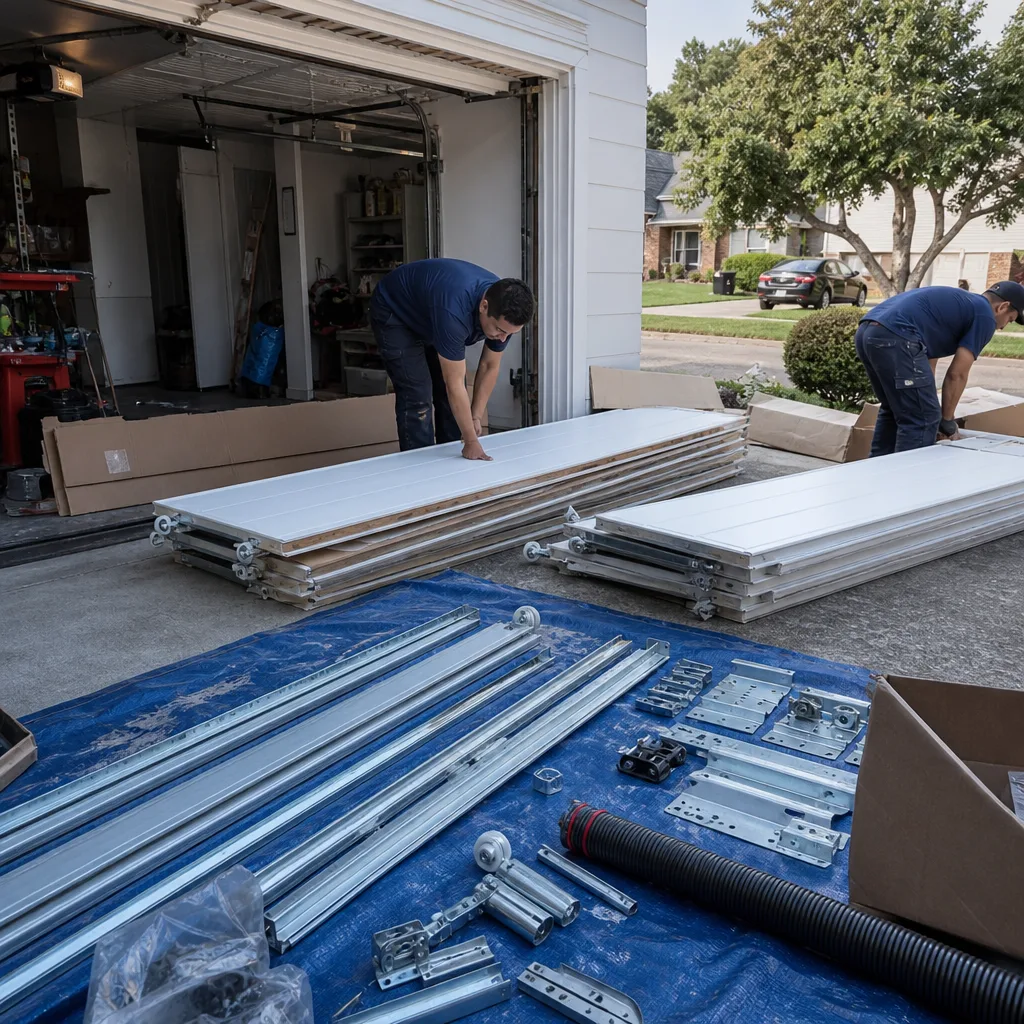
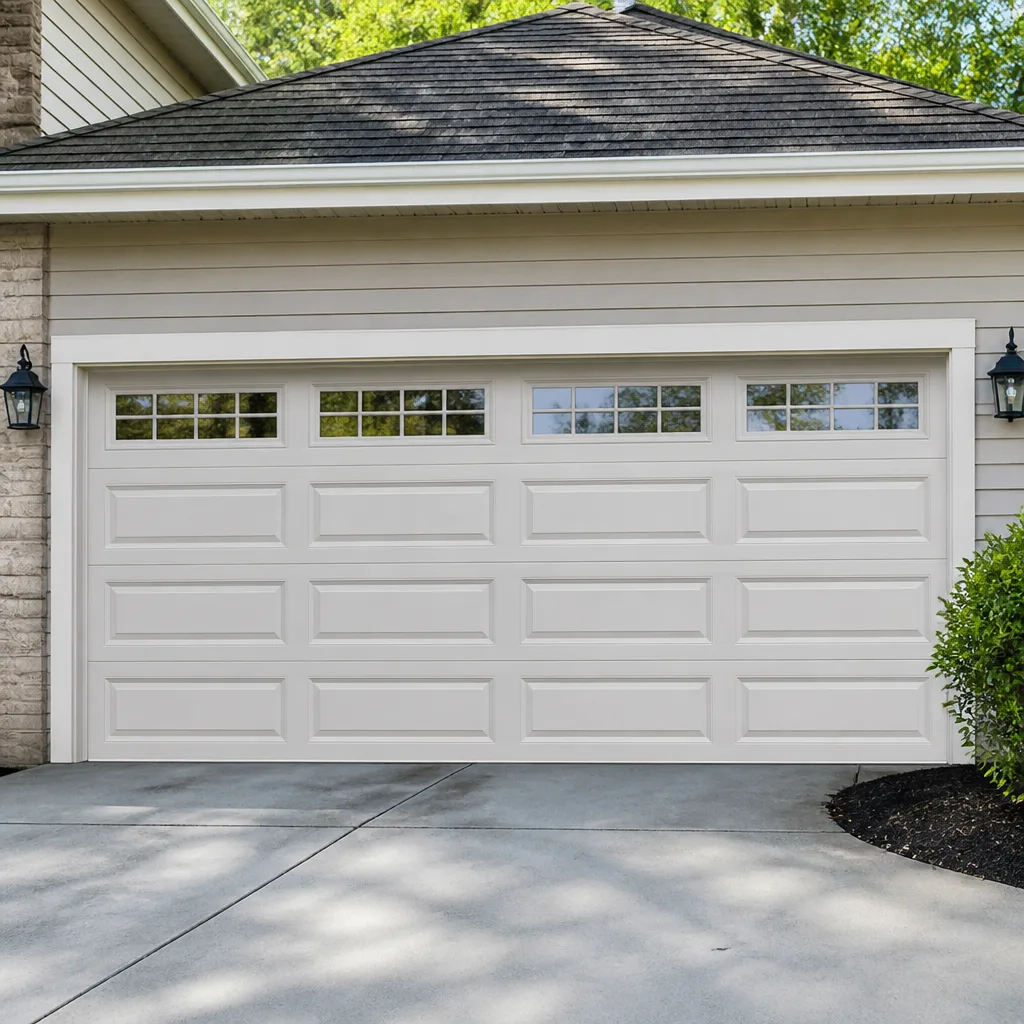 Raised-panel steel
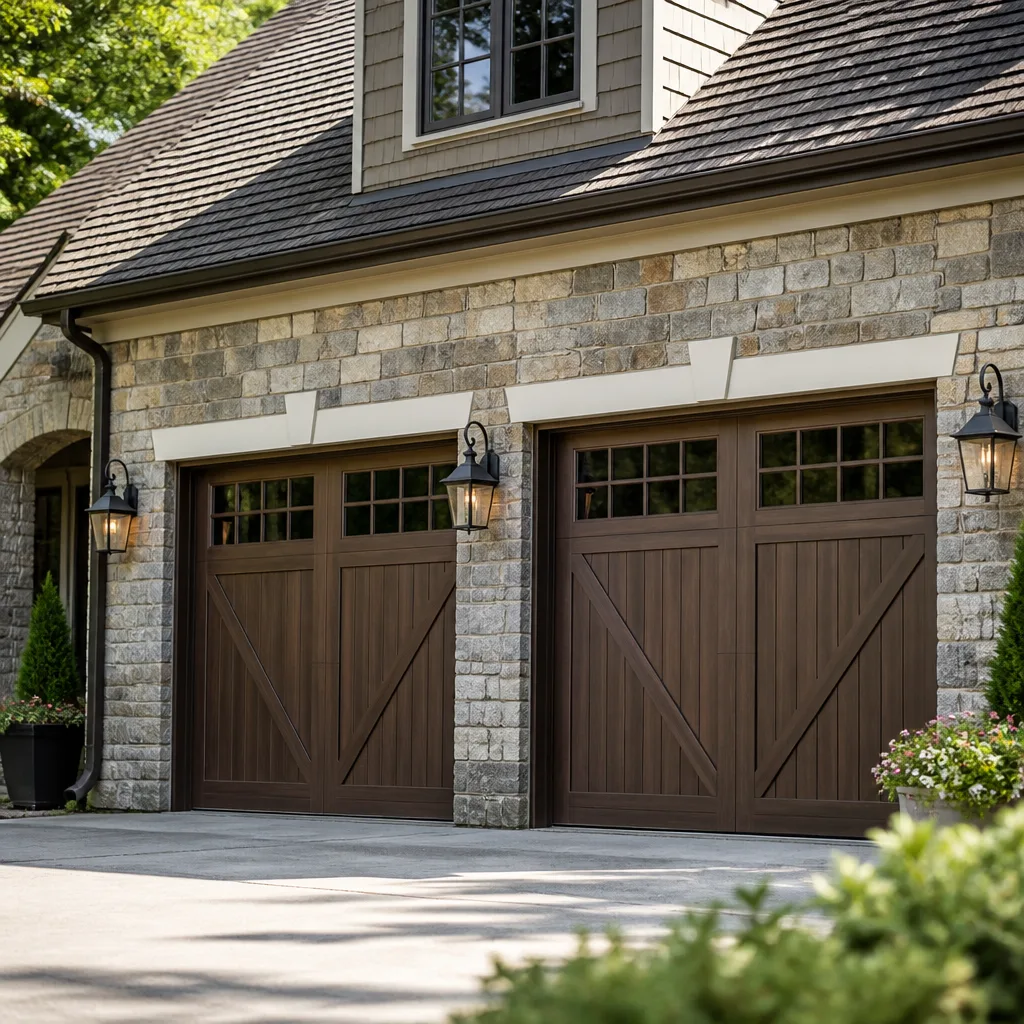 Carriage house
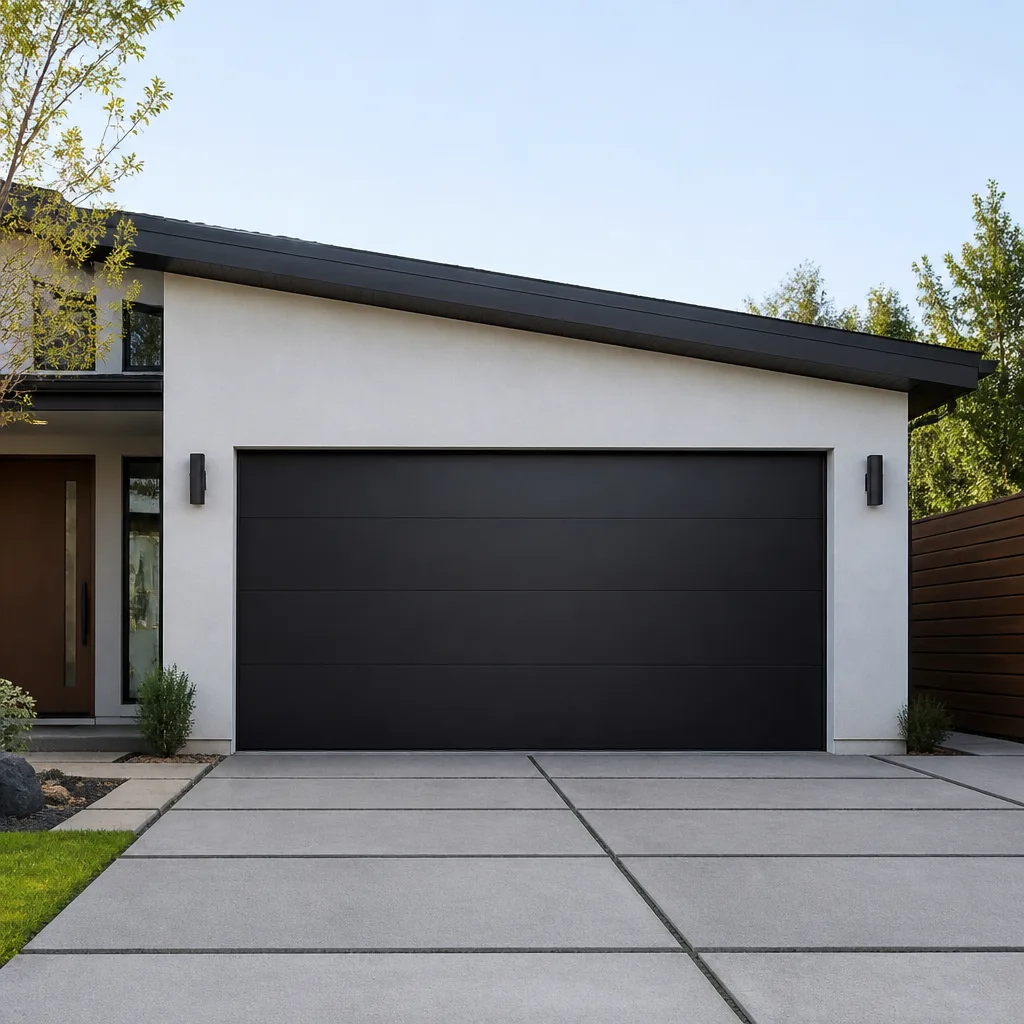 Modern flush
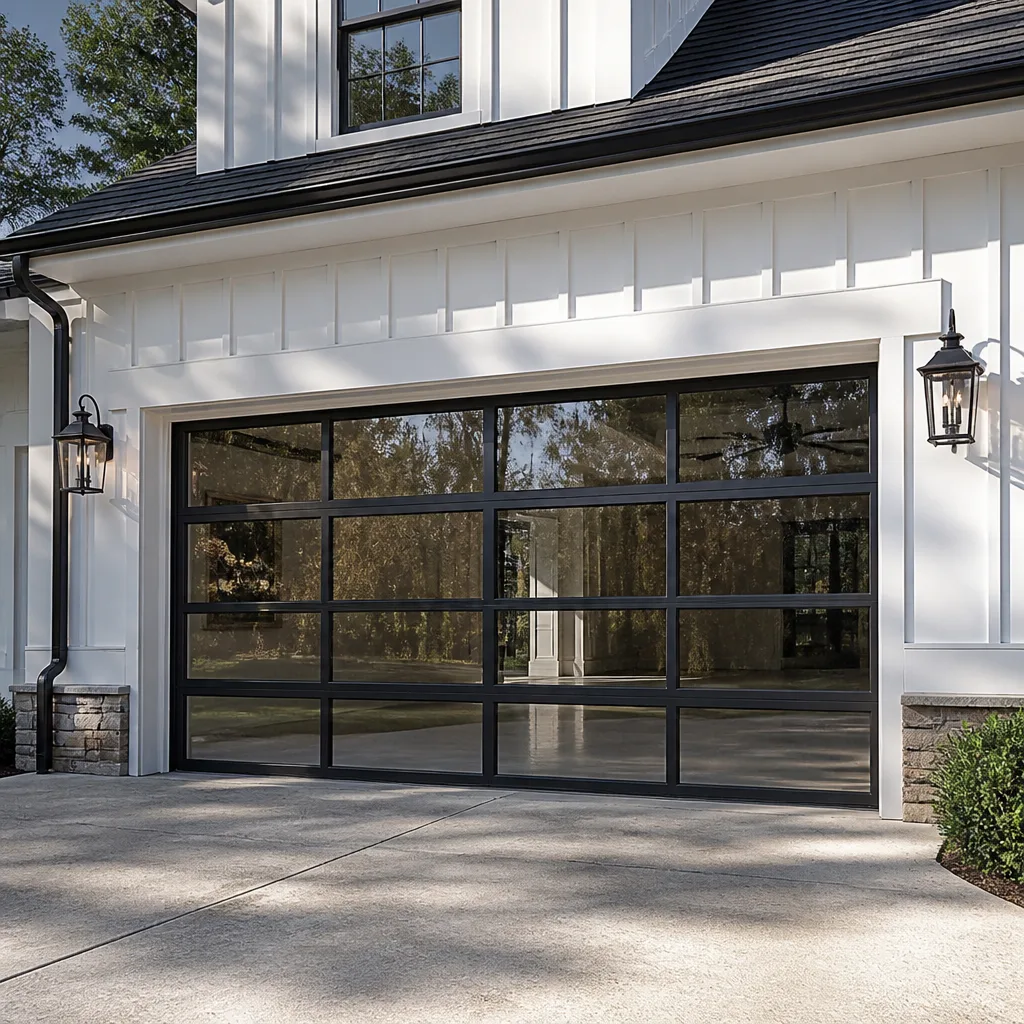 Full-view glass
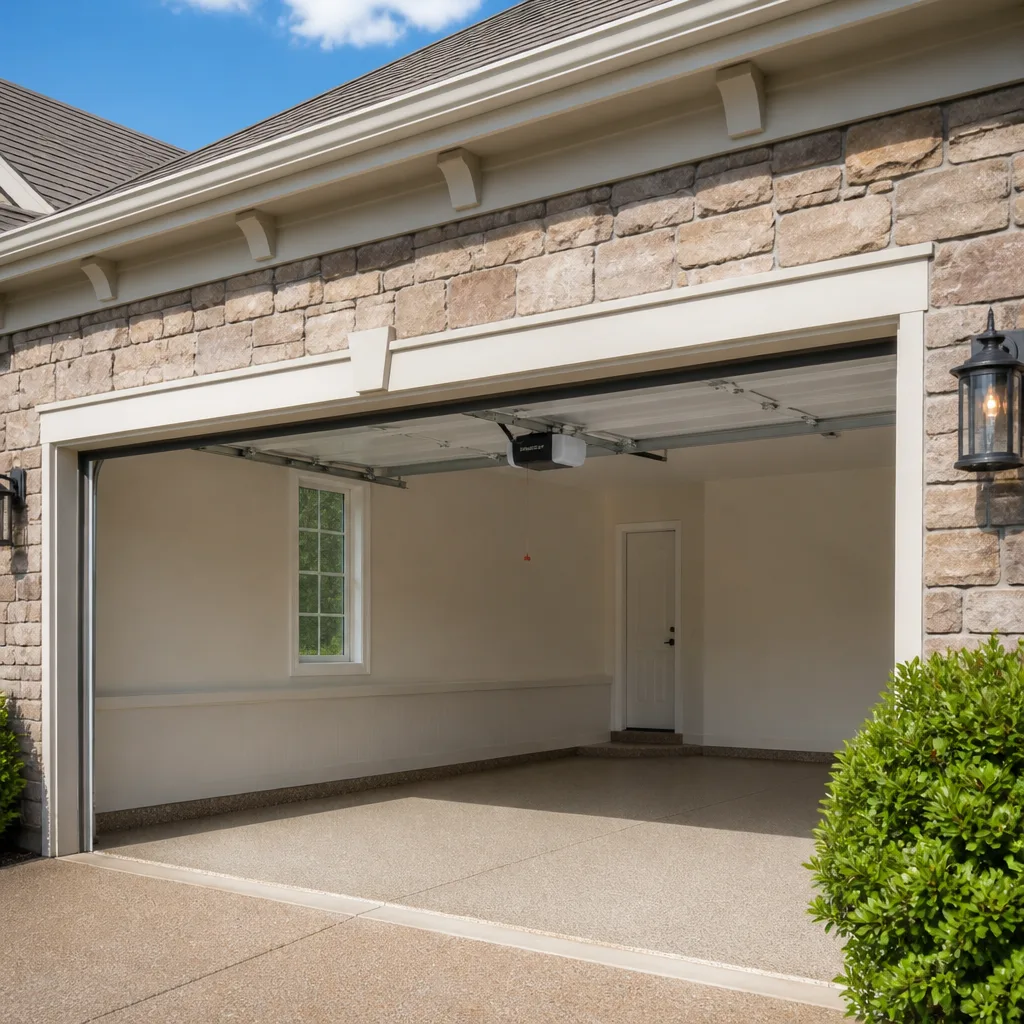 LiftMaster openers
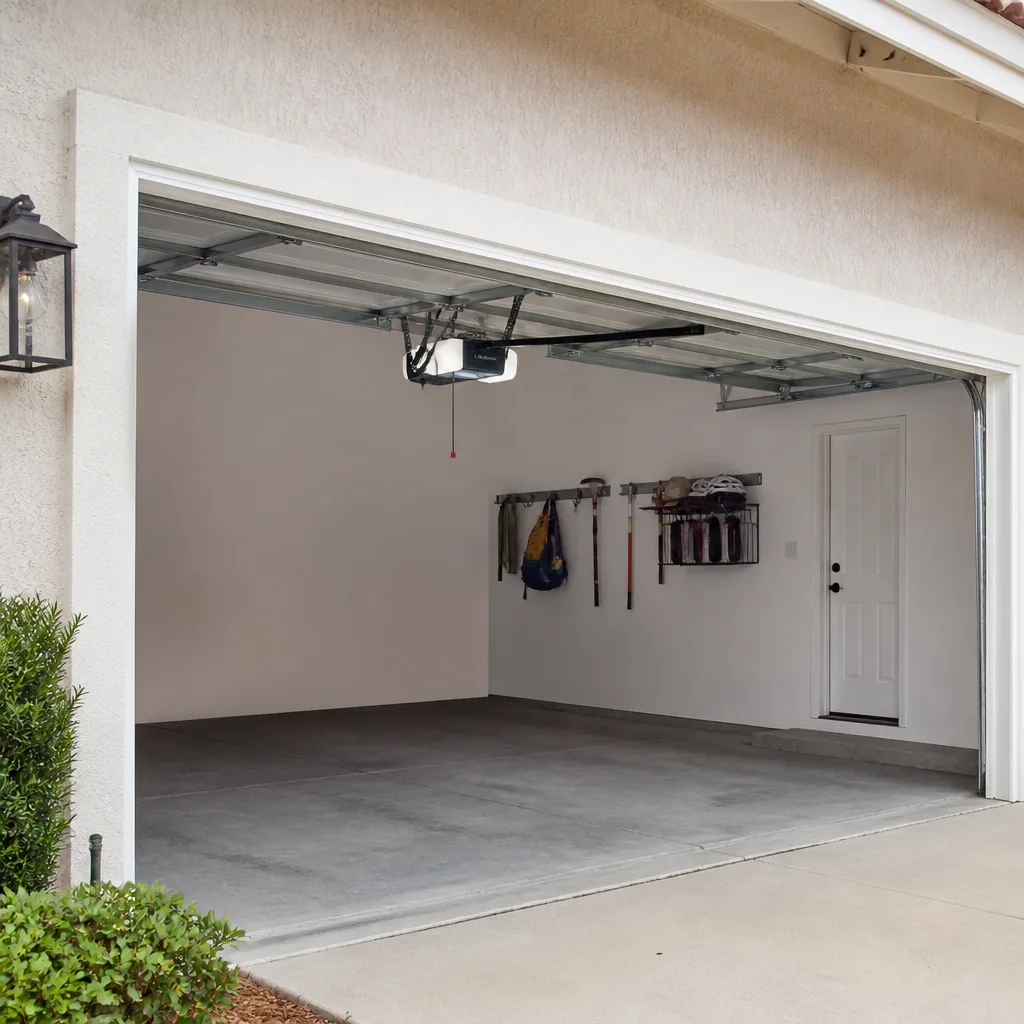 Chamberlain openers
Full 25-point door and opener safety check with every visit - springs, cables, rollers, tracks, and your LiftMaster or Chamberlain opener included
You get a price before we start. It does not change when the pro arrives.
Get your free estimateGarage Door Repair Maintenance Checklist for Arlington Homeowners
The number-one reason garage doors fail prematurely in Northern Virginia isn’t neglect. It’s performing the wrong maintenance on the right schedule. Plenty of Arlington homeowners lubricate everything that moves, tighten every bolt they can reach, and still end up with a snapped spring or a crooked door by February. The parts that actually fail here fail for reasons most checklists never mention: summer humidity that swells wood panels, winter road treatment that eats into the bottom seal, and an opener that’s been fighting an unbalanced door for years. This guide gives you a checklist built around those realities, section by section, with pass-or-fail criteria instead of vague “check for wear” language. You’ll learn what’s safe to handle yourself, what isn’t, and how to spot trouble before it strands your car.
Quick Answer
A working garage door maintenance routine for Arlington means three things: testing the balance and safety reverse every month, cleaning and lubricating the moving parts twice a year, and getting a trained technician to inspect springs, cables, and hardware once a year. Most door failures we see in Arlington trace back to one skipped step – usually the balance test – rather than to a single worn part. Do the monthly and twice-yearly tasks yourself, and hand the spring-and-cable inspection to a professional.
Styles & brands we work with
- Raised-panel steel
- Carriage house
- Modern flush
- Full-view glass
- LiftMaster openers
- Chamberlain openers
Table of Contents
- Monthly Tasks: The Fifteen-Minute Check
- The Spring Balance Test and Why It Matters
- Twice-a-Year Tasks: Lubrication, Seals, and Tracks
- How Arlington Humidity Treats Wood, Steel, and Fiberglass Differently
- Winter Road Treatment and What It Does to Your Bottom Seal
- The Annual Professional Inspection
- DIY-Safe vs. Call-a-Technician: Knowing the Line
- Opener Strain and Why Balance Saves the Motor
Monthly Tasks: The Fifteen-Minute Check
Once a month, spend fifteen minutes on your door and you’ll catch most developing problems while they’re still cheap to fix. This isn’t a deep inspection. It’s a quick pass that tells you whether the door is behaving the way it should.
- Listen to the door as it opens and closes. A healthy door makes a steady, even sound. Grinding, squealing, or a rhythmic thump points to worn rollers, a dry hinge, or a track that’s out of alignment. If the noise started recently, note when it happens – at the start of travel, at the end, or throughout.
- Watch the door travel straight. Stand back and look at the gap on each side as the door rises. The door should stay level. If one side lags, the door is binding, and that’s a balancing or track problem, not a lubrication problem.
- Test the safety reverse. Place a roll of paper towels or a 2×4 flat under the door and press the close button. The door should reverse within a couple of inches of contact. If it presses down and keeps going, stop using the opener and call for garage door repair before you use the door again.
- Test the photo-eye sensors. Wave an object across the beam at the base of the tracks while the door closes. The door should reverse immediately. Wipe the lenses if the test fails; if it still fails, the sensors need attention.
- Look at the springs. On a torsion system, that’s the coiled spring on the shaft above the door. On an extension system, it’s the springs running along the horizontal tracks. Look for visible gaps or a stretched, separated coil. A broken spring means the door is now dead weight – don’t operate it.
If all five checks pass, you’re done for the month. If any one fails, write it down. Repeated small failures add up to a repair call you could have avoided.
The Spring Balance Test and Why It Matters
This is the single most skipped task on most garage door maintenance checklists, and skipping it is the fastest way to wear out an opener. Springs carry the weight of the door. The opener’s job is to guide it, not lift it. When springs lose tension, the opener starts doing lifting work it wasn’t built for, and the motor, gears, and drive system take the hit.
Here’s how to test balance safely, without touching a spring or a cable:
- Close the door and disconnect the opener using the manual release cord. The door should now move by hand only.
- Lift the door to about waist height and let go.
- A balanced door stays roughly where you let it go, or drifts down slowly. That’s a pass.
- If the door drops fast or slams down, the springs are under-tensioned. If it wants to rise on its own, they’re over-tensioned. Both mean the door needs adjustment.
Reconnect the opener only after you’ve noted the result. An unbalanced door is not a maintenance item you handle yourself – spring tension is adjusted with winding bars on a live, high-tension component, and it’s one of the most dangerous jobs in this trade. Our garage door spring repair team handles tension adjustments as part of what we do, and we always check the balance before we touch anything else. Note that skipping the balance test over time is one of the leading reasons opener warranties get denied when a motor fails; manufacturers expect the door to be balanced, and an unbalanced door is measurable. Test monthly, and treat any change as a signal to call.
Twice-a-Year Tasks: Lubrication, Seals, and Tracks
Twice a year – once as the heat arrives in late spring and once before the cold settles in – spend about an hour on the door’s moving parts and seals. These are the tasks that keep friction low and water out.
- Lubricate hinges, rollers, and the torsion shaft bearings. Use a garage door or silicone-based lubricant. Avoid heavy grease on rollers; it attracts dust and grit. Two or three drops per hinge pivot, a light coat on the roller stems, and a small amount on the bearings is all it takes.
- Clean the tracks with a damp cloth, not solvent. Wipe away dust and grit, then dry. Don’t lubricate the tracks themselves – oil plus grit turns into a paste that fights the rollers.
- Inspect the bottom seal. Run a hand along the rubber or vinyl seal at the base of the door. It should be flexible and sit flat against the floor. Hardened, cracked, or torn seals let in water and cold air, and in Arlington they’re the first part to fail after a few winters.
- Look at the weatherstripping on the sides. Same idea as the bottom seal. If it’s pulling away or crumbling, it needs replacing, not patching.
- Check the door panels for loose hardware. Bolts and brackets that loosen over time can rattle or shift the door out of alignment. Tighten with a wrench, not a drill on high torque, which can strip threads.
If you own an Amarr or Wayne Dalton door with a steel or composite panel construction, this twice-yearly pass is also the moment to inspect panel seams for early rust. Those brands hold up well when seams stay dry and clean, and poorly when water sits in them. Our Pryor Garage Door Repair team works with both, and seam inspection is a routine part of what we do on older installations.
How Arlington Humidity Treats Wood, Steel, and Fiberglass Differently
Arlington’s summers are sticky and its winters are dry and cold. That cycle – high July humidity swinging down toward low January humidity – moves wood and stresses the parts around it. Different door materials handle that swing very differently, and the maintenance you do should match what the door is made of.
- Wood doors. Older raised-panel wood doors are the ones that suffer most. The panels expand slightly in summer humidity, then shrink back in winter, and the paint film at the panel joints cracks a little each cycle. Once water gets into a joint, rot starts in the panel cores. The fix is simple: check the paint every spring, and reseal any spot where the film has cracked or lifted. Don’t wait for peeling – by the time paint peels, moisture is already in the wood.
- Steel doors. Steel is more dimensionally stable, but water sitting in seams and along the bottom edge is what rusts it. Arlington’s swings don’t crack steel, but they do drive condensation on the inside face during cold snaps. Wipe condensation when you notice it, keep the bottom seal tight, and check the panel seams for rust once a year.
- Fiberglass doors. Fiberglass handles humidity swings well and doesn’t rot. The panels themselves aren’t the problem – the paint finish and the hardware around them are. UV exposure from long summers dulls finishes and can cause surface cracking over time. A light wash and, when needed, a fresh coat of paint keeps it looking the way it should.
One general note: doors on the western-facing side of a house in Arlington see more direct afternoon sun in summer, which ages finishes faster than on other exposures. If your door faces west, plan on checking paint and seals slightly more often than a north-facing door needs.
Winter Road Treatment and What It Does to Your Bottom Seal
Road treatment in Arlington kicks up a fine, salty spray that dries on your car, on your driveway, and on the lower edge of your garage door. That residue does more damage to door components than most homeowners realize.
The bottom seal and the lower panel edge are where it collects. Over a winter, the residue works into the seal’s rubber or vinyl and the track near the floor, and it accelerates corrosion and drying. Come spring, an aging seal has cracked and a lower panel seam shows the first signs of rust.
Here’s what to do about it:
- Rinse the lower door edge and bottom seal weekly during road-treatment season. A garden hose and a soft rag are enough. Don’t pressure-wash the seal; it drives water into the door.
- Wipe the bottom four inches of the vertical tracks. A damp cloth removes the residue before it cakes on. Dry afterward.
- Inspect the bottom seal at the end of the season. Run a hand along it – flexibility and a clean surface are the pass criteria. If it’s brittle or torn, replace it before the next season starts.
- Check for rust on the lowest panel seam. A light coat of appropriate touch-up paint on a small rust spot stops it spreading. Larger rust means the panel is failing.
This is one task most generic “garage door maintenance” lists leave out entirely, but it’s the one that matters most in Arlington after a hard winter. If you can’t get ahead of it, a repair visit is the way to catch it before it turns into a panel replacement.
The Annual Professional Inspection
Once a year, get a technician who works on garage doors all day to walk the door system under load. This isn’t a repair visit – it’s an inspection that catches the things you can’t see from the outside.
A thorough annual inspection covers:
- Spring condition, tension, and remaining service life on both torsion and extension systems
- Cable condition, including checking for fraying and correct tension on both sides
- Track alignment and roller wear – a roller can look fine and still be flat-spotted
- All hinges and hardware for wear and correct tightening
- Door panel condition – structural cracks, sagging sections, and panel separation
- Opener drive system, gear wear, and safety reverse calibration
- Safety reverse and photo-eye operation under real-world conditions, not a manual test
Why the annual visit matters more than the twice-yearly tasks: most of what causes a door to fail without warning starts as something subtle. A cable strands one strand at a time. A torsion spring loses a bit of tension each year. A roller slowly flat-spots. Catching any of these on an inspection schedule means a planned repair, not a stranded car and an emergency call. When your door needs a technician’s eyes on it, our garage door opener repair and door-service specialists cover the whole system, brand-matched, from worn springs to smart opener units.
DIY-Safe vs. Call-a-Technician: Knowing the Line
Some garage door maintenance is genuinely safe for a homeowner to handle. Some is genuinely dangerous, no matter how comfortable you are with tools. The line is clearer than most guides suggest.
Safe to do yourself
- Lubricating hinges, rollers, and bearings
- Cleaning tracks and the bottom seal
- Testing balance, safety reverse, and photo-eye sensors
- Tightening visible bolts and brackets
- Washing the door and touching up small spots of paint or rust
- Replacing the bottom seal and weatherstripping (with the door closed and the opener disconnected)
Not safe – call a trained technician
- Adjusting or replacing torsion or extension springs
- Working on cables, drums, or the torsion shaft
- Realigning a door that has come off its track
- Replacing a torsion shaft or center bearing plate
- Any repair where the door has fallen or is hanging unevenly
Springs and cables hold tremendous stored force. A torsion spring that slips while being adjusted can cause serious injury in a split second, and this is exactly why spring repair is a core part of our work rather than something general handymen handle. Our technicians have up to 10 years of experience, and they work on these systems with tools and procedures built for the job.
Opener Strain and Why Balance Saves the Motor
Your opener is doing more work than it should if the door isn’t balanced. That’s true regardless of brand or type. A chain-drive opener on a slightly heavy door is working harder than a belt-drive opener on a balanced door. A smart opener on an unbalanced door is doing the same lifting work – it’s just connected to your phone.
The relationship between balance and opener life is direct. When the door is balanced, the opener guides and controls. When it isn’t, the opener lifts. The motor, the gears, the drive belt or chain, and the limit switches all take a share of that extra load. The most common failure pattern we see in Arlington isn’t a worn motor – it’s a motor or drive train that wore out early because the door it was lifting was heavier than it should have been.
This is why the balance test matters so much. If it’s telling you the springs need adjustment, ignore the door’s behavior and you’ll be replacing an opener unnecessarily. Our opener work covers the full range from legacy chain-drive units to modern smart systems, and we check door balance as a matter of course before we recommend anything. If your opener is running well but the door is dragging, the fix may not be the opener at all.
Common Mistakes to Avoid
- Greasing the tracks. Oil plus dust turns into a gritty paste that slows the rollers and attracts debris. Keep tracks clean and dry, and let the rollers and hinges carry the lubricant.
- Skipping the balance test because the door “seems fine.” A door can feel fine and still be loading the opener far more than it should. Balance is measurable – test it, don’t judge it by feel.
- Painting a wood door without checking the joints first. A fresh coat over a cracked paint film at a panel joint traps moisture in the wood. Strip or sand back to bare wood at those spots before repainting.
- Ignoring road treatment residue between winters. A seal that survives one winter fine is the one that fails the next. Rinse the lowers regularly during road-treatment season and it won’t accumulate.
- Letting a broken spring “wait until it’s convenient.” A door with a broken spring should not be operated – the weight isn’t supported, and using the opener on a dead-weight door can bend panels or damage the opener irreparably.
- Adjusting a track with a hammer. Tracks bend easily and need careful realignment. A hammer will make it worse and could set up a door that comes off its track during travel.
- Using any garage door opener repair that isn’t brand-matched. A Craftsman, Raynor, or Chamberlain opener has specific parts and behaviors. Generic repair attempts can leave the unit running but not cutting off correctly at the end of travel.
See the difference
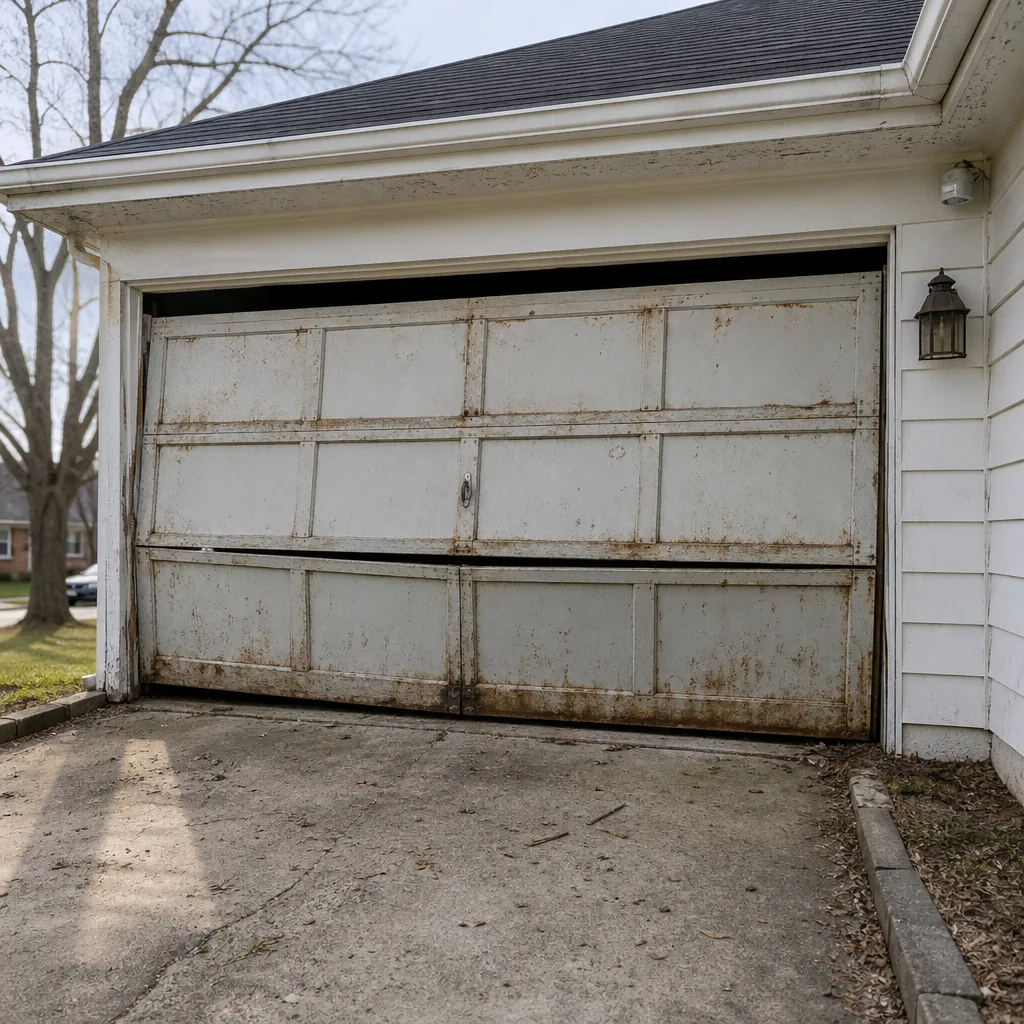 Before
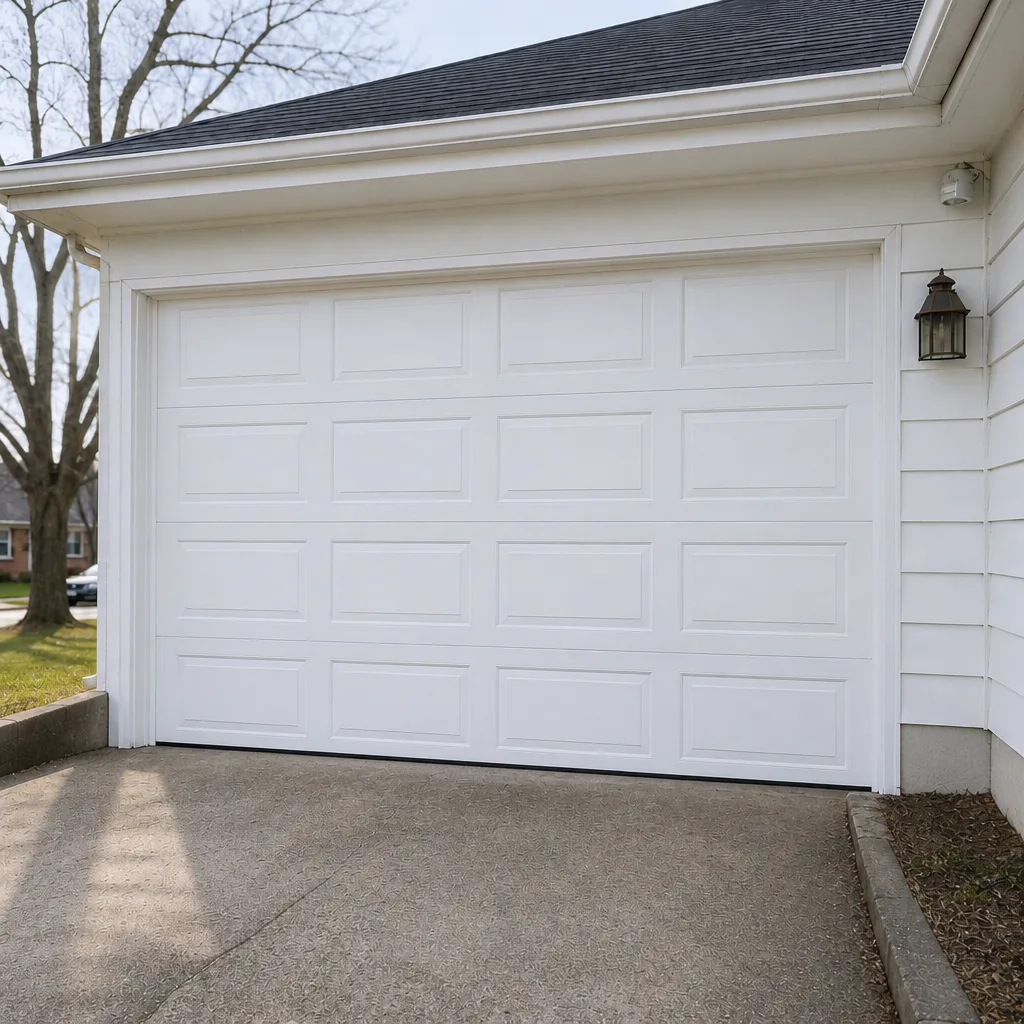 After
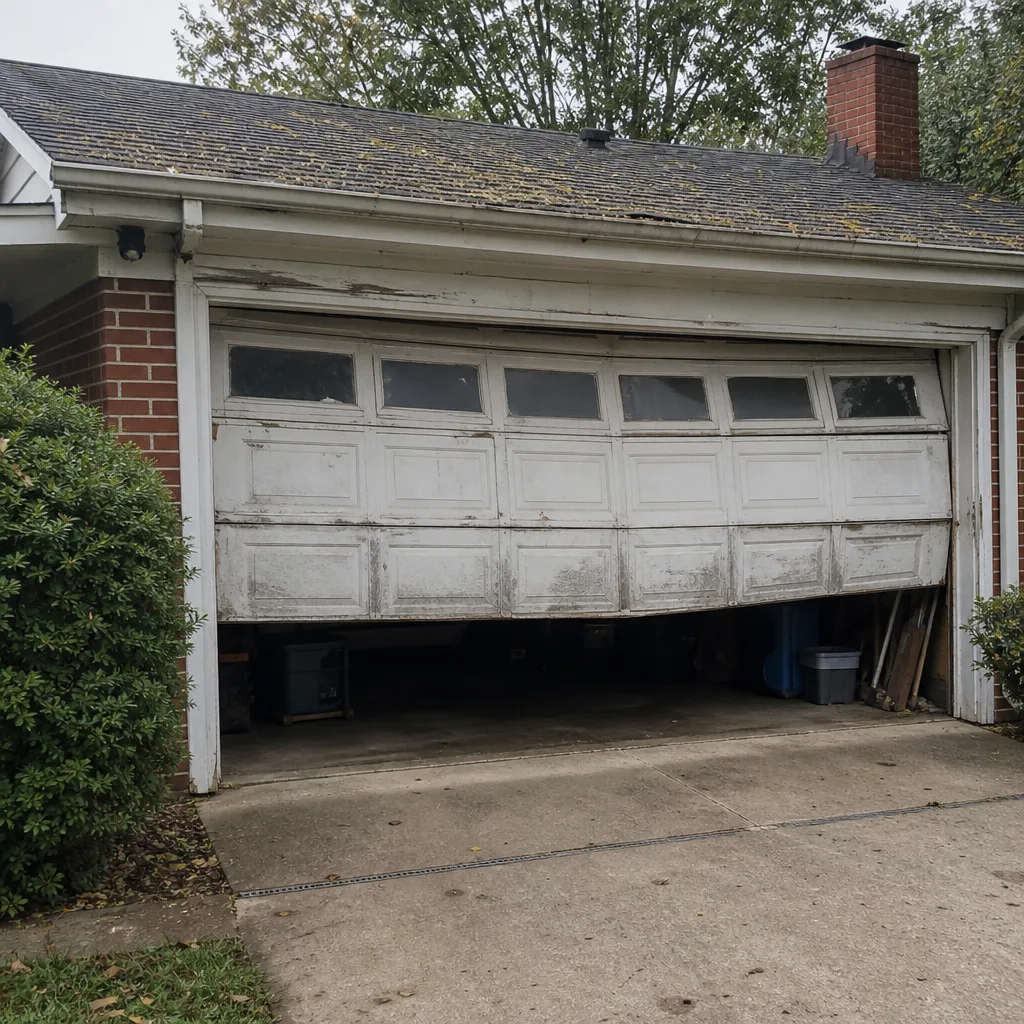 Before
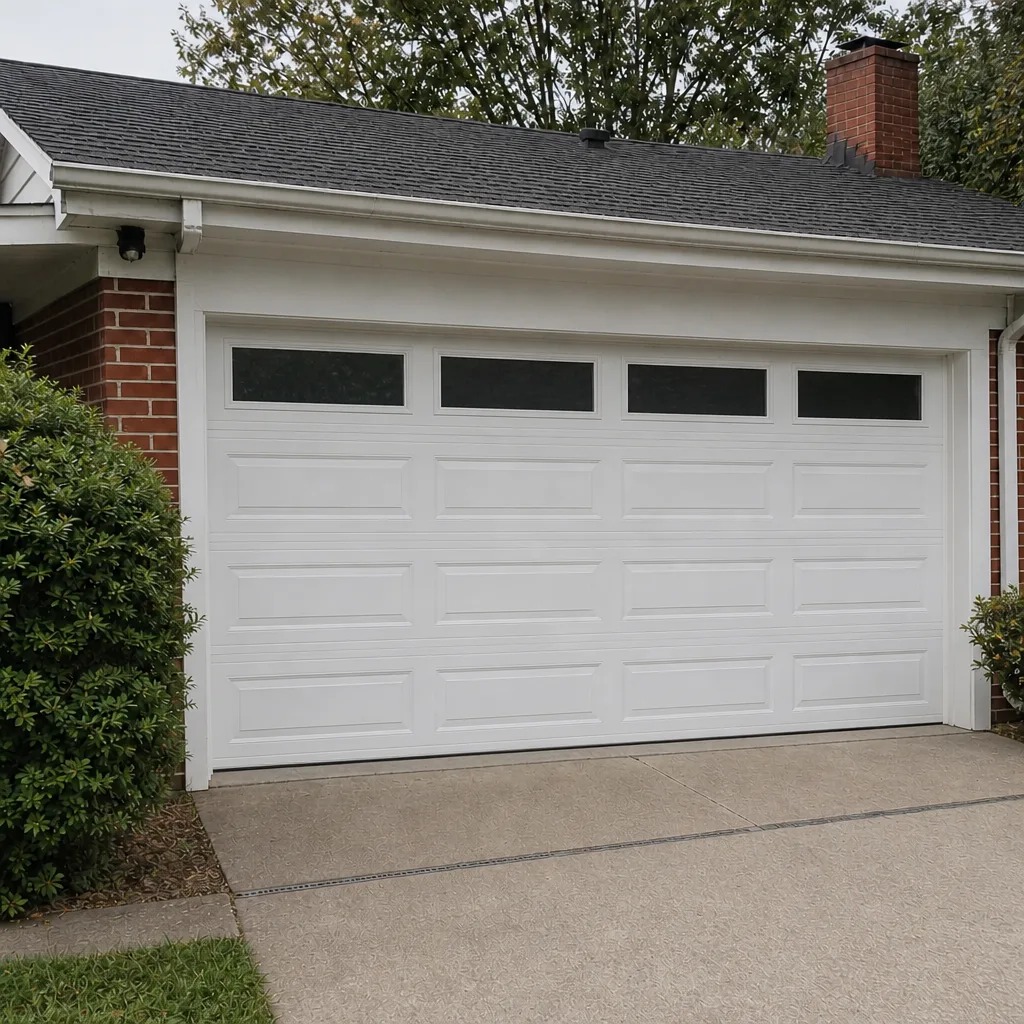 After
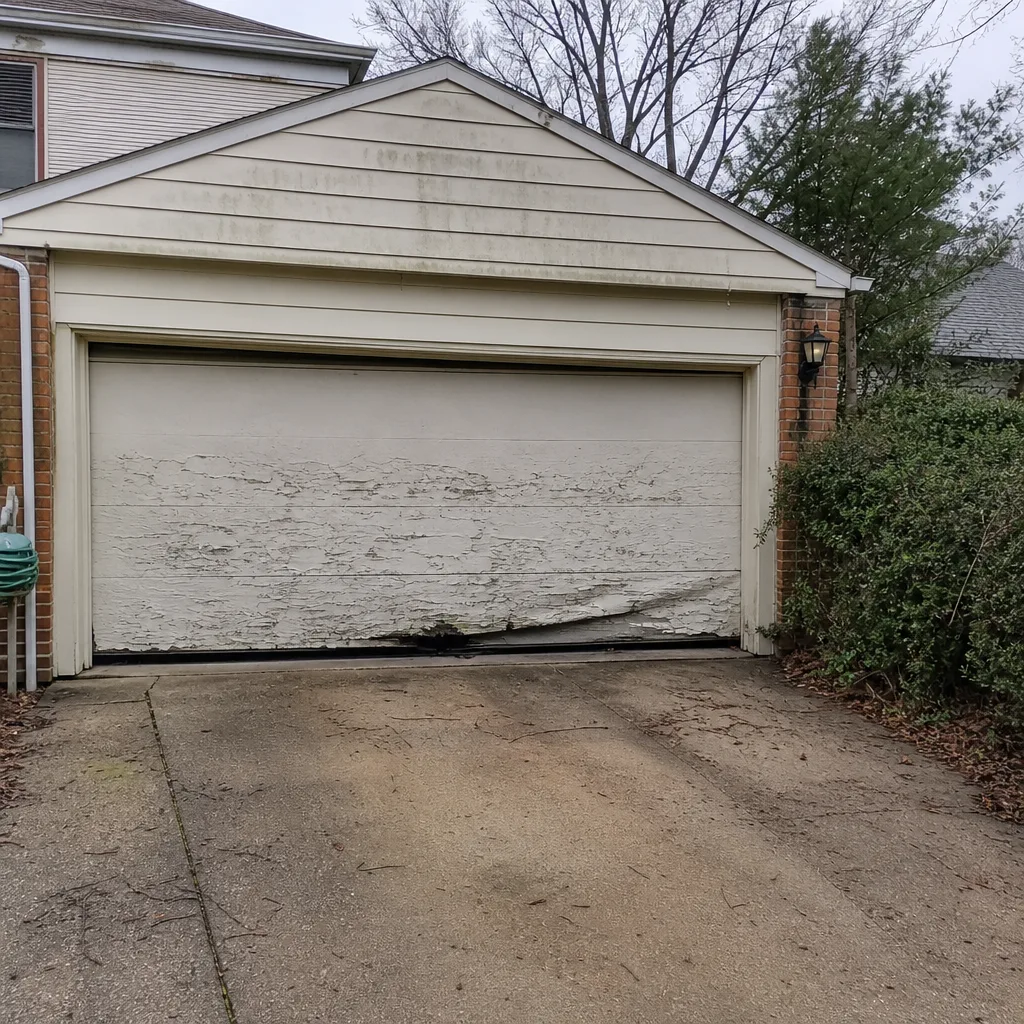 Before
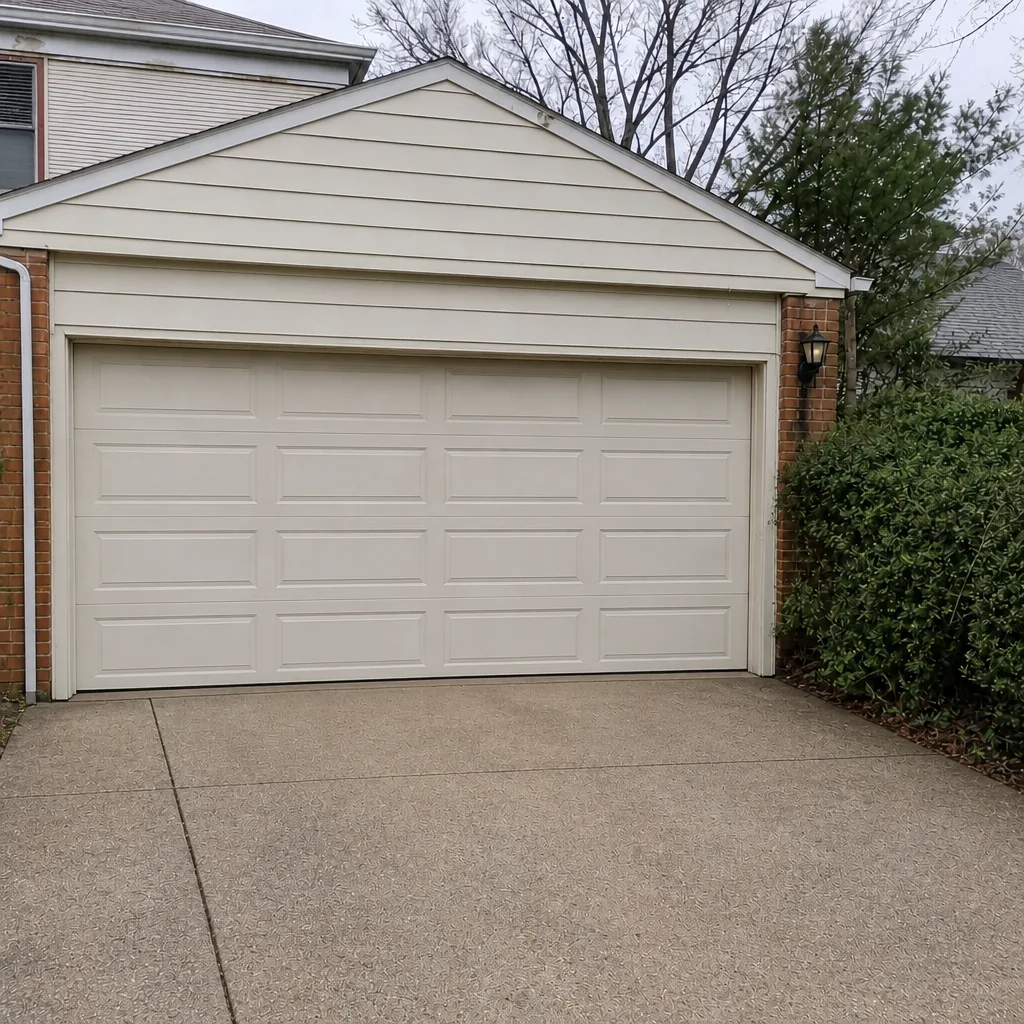 After
When to Call a Professional
Call a professional when the door won’t move at all, when the spring is broken, when the door has come off its track, when the door is visibly sagging or crooked, when the opener runs but the door doesn’t, or when the safety reverse fails during your monthly test. Any of those situations means the door is either a safety risk or a security risk, and both deserve a trained technician rather than a weekend project. If the door is stuck open, the security risk is real – a stuck-open door is an open invitation. If it’s stuck closed, it’s a safety trap. If you’re not sure, the balance test is a quick, safe way to check. Pryor Garage Door Repair offers free estimates in Arlington – call (844) 917-3733. We answer 24/7. Fast dispatch from 7am to 7pm, Sunday through Friday.
Frequently Asked Questions
Every month. Springs lose tension gradually, and a door can pass the balance test in March and fail it by September without anything else changing. Because Arlington’s winters and summers move the door’s weight around through temperature swings, monthly checks catch the change sooner. It takes a couple of minutes – close the door, disconnect the opener, lift to waist height, and let go.
Yes, though the specifics depend on what your door is made of. Wood doors need paint resealed each spring before the summer humidity climbs, steel doors need condensation wiped and seams checked, and fiberglass doors mainly need finish care. The twice-a-year lubrication pass is the same for all types, but the material-specific checks aren’t.
You can replace the bottom seal yourself if the door is fully closed and the opener is disconnected. It’s a homeowner-safe job with the right size seal. If the replacement seal doesn’t sit flat or the door runs rough afterward, that’s a sign the bottom edge or track alignment needs a professional look.
Almost always because the door isn’t balanced – the maintenance list you’ve been doing may cover lubrication and cleaning, but not the balance test. An unbalanced door loads the opener motor and drive train every time you use it. Test balance, and if it fails, have the springs adjusted before you replace another opener.
It usually means road-treatment residue has worked into the lower tracks or the bottom seal, or that cold-weather drying cracked the seal. Clean the lower four inches of both tracks, wipe down the bottom seal, and listen again. If the noise is at the top of the travel instead, that points to the torsion hardware rather than the track.
A door stuck open, a broken spring, a door that has come off its track, or a door that won’t close all the way and leaves the garage exposed. Those are the situations where the door is either a security risk or a safety risk, and they’re worth a call right away. We handle emergency garage door service as part of our regular work, not as a premium add-on. Call (844) 917-3733 – the estimate is free.
The Bottom Line
Garage door maintenance that actually prevents failures looks different in Arlington than it does in a dry climate. It’s monthly balance tests, twice-a-year lubrication and seal care, weekly rinses during road-treatment season, and a spring-paint check every spring for wood doors. The spring and cable inspection is the one task that belongs in a trained technician’s hands – the safety margin isn’t worth the savings. Do the monthly and twice-yearly checks yourself, book the annual inspection, and you’ll spend less on repairs and get more years out of the door and opener you already have.
If anything in this checklist flagged a problem, or you’d rather have a trained eye on the door before winter, call Pryor Garage Door Repair at (844) 917-3733 for a free estimate. We answer 24/7. Fast dispatch from 7am to 7pm, Sunday through Friday, on repairs, springs, openers, and full new door installation across Arlington.
Written by the team at Pryor Garage Door Repair.