
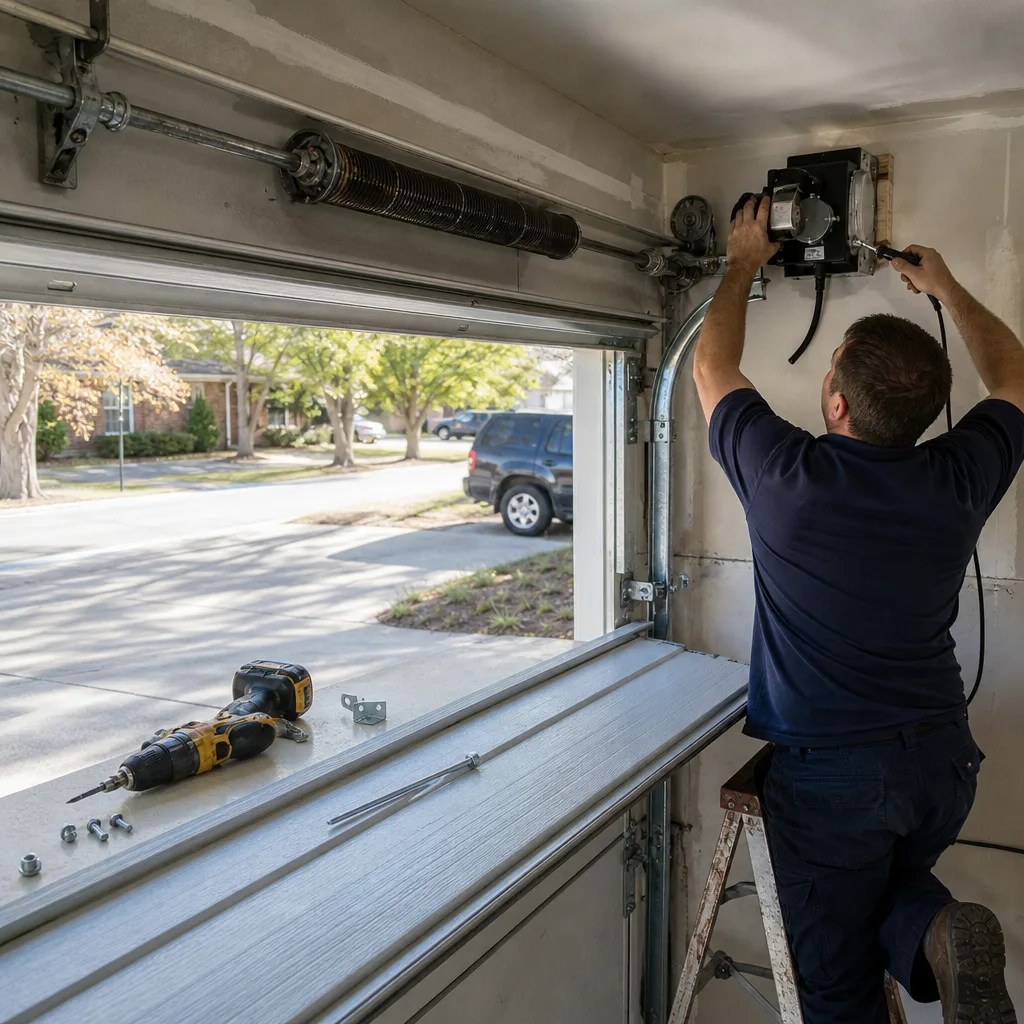
Last updated November 21, 2026
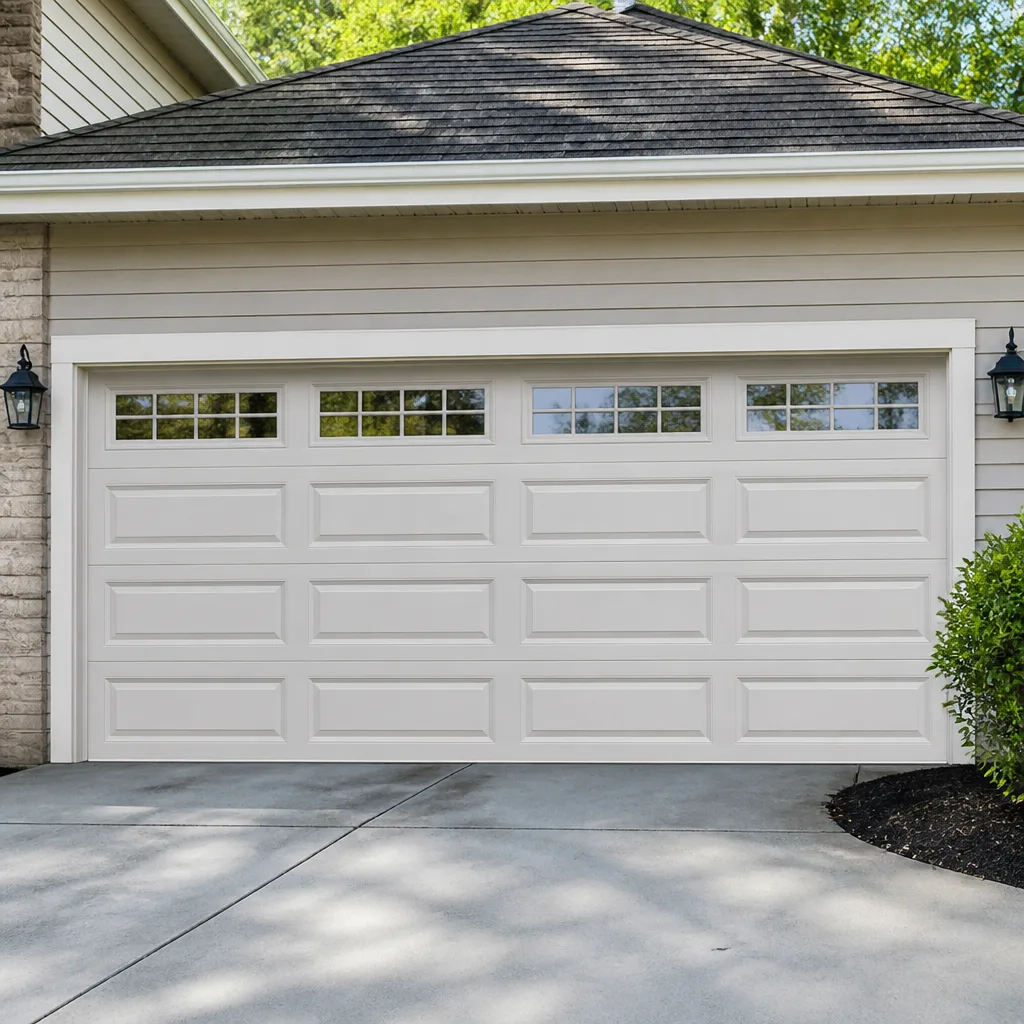 Raised-panel steel
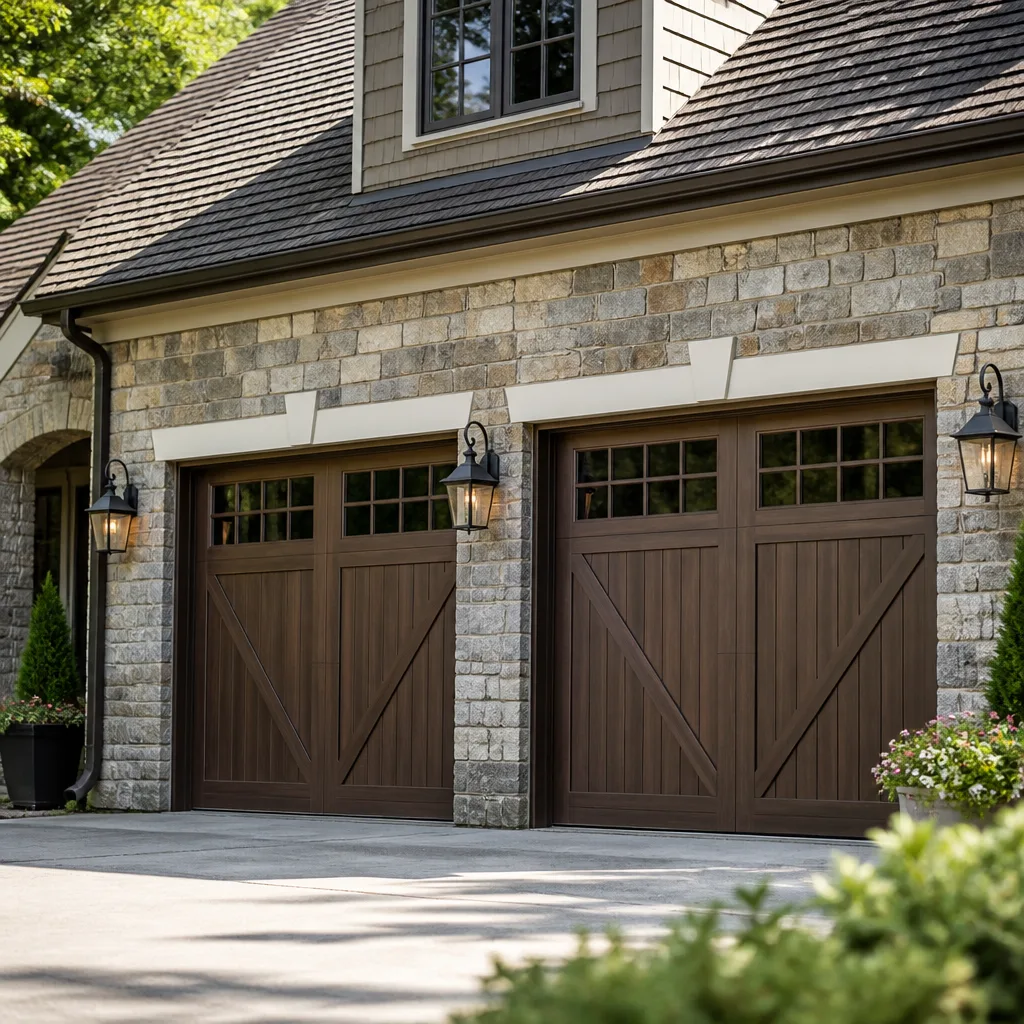 Carriage house
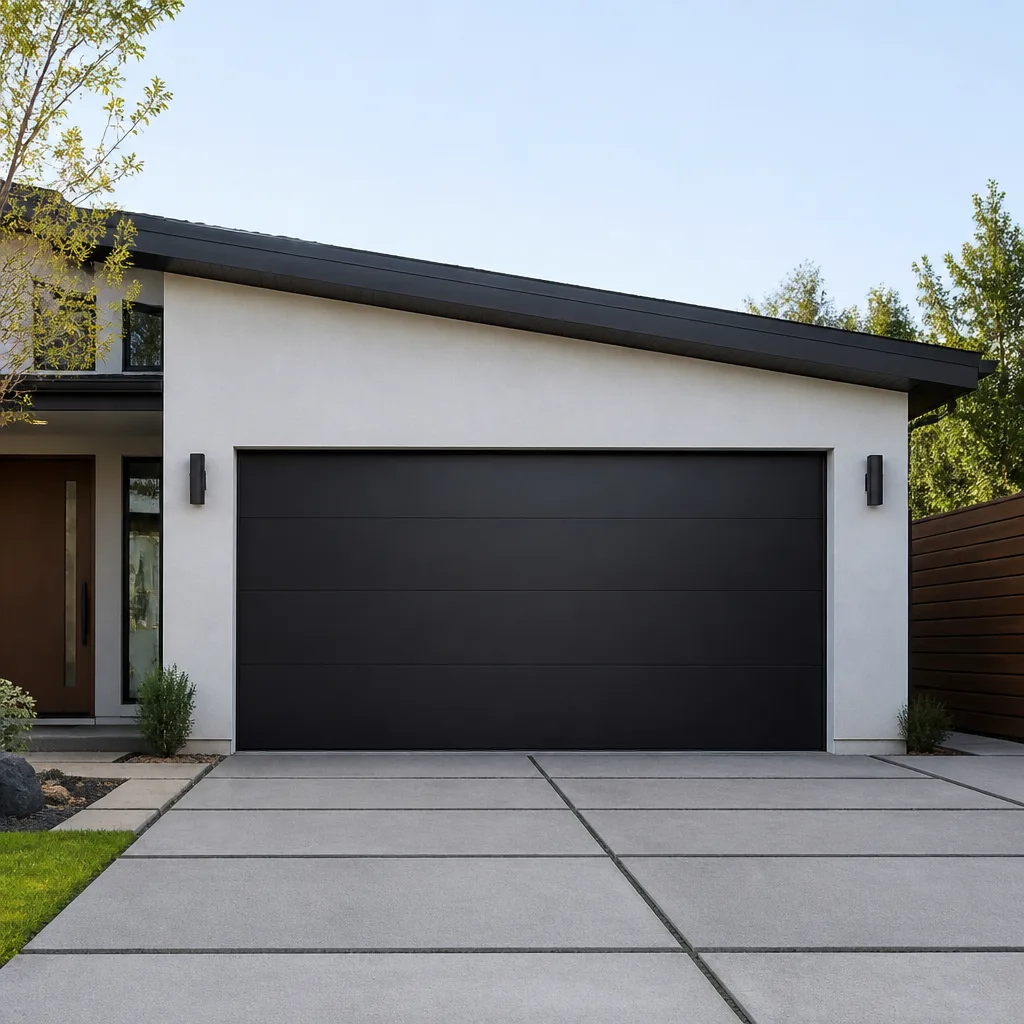 Modern flush
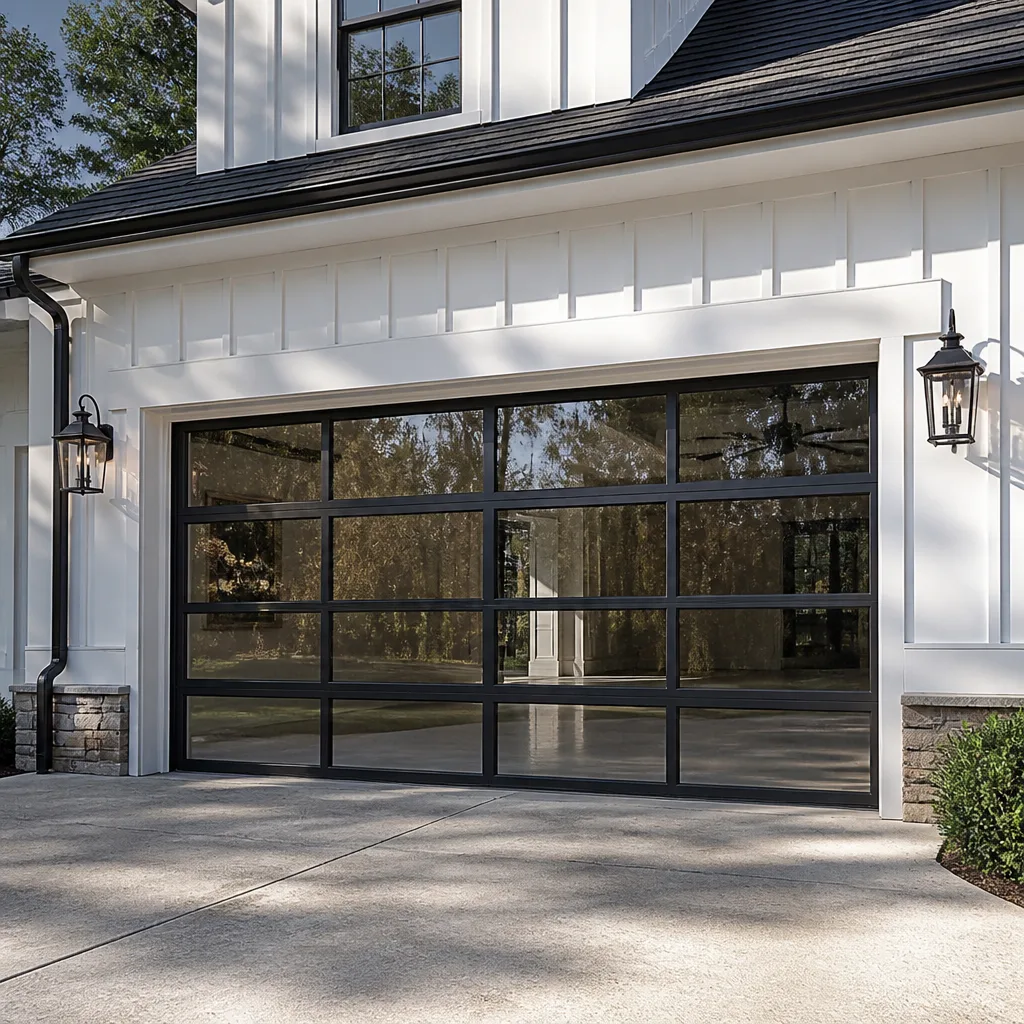 Full-view glass
 LiftMaster openers
 Chamberlain openers
Full 25-point door and opener safety check with every visit - springs, cables, rollers, tracks, and your LiftMaster or Chamberlain opener included
You get a price before we start. It does not change when the pro arrives.
Get your free estimateGarage Door Cost Breakdown: The Arlington Homeowner’s Reference for 2026
The cheapest quote for a garage door replacement in Arlington is usually missing something, and it’s rarely a mystery what. Nine times out of ten it’s the haul-away fee, the permit fee, or the labor to bring a non-standard opening into spec. The homeowner sees a lower number, signs, and finds out three weeks later that the “lowball” wasn’t the price at all; it was a deposit on a bigger bill. This guide walks through every line item that actually drives garage door pricing in Arlington in 2026, why material choice swings cost more than most people expect, and exactly how to compare three quotes on the same scope so you can tell a fair price from a clever one. If you’ve ever wondered why your neighbor paid one number and you were quoted another, that’s what we’re explaining here.
Quick Answer
Garage door costs in Arlington in 2026 typically run from about $220 to $480 for a torsion spring replacement (one spring), $340 to $690 for a matched pair, $175 to $450 for a cable repair, $450 to $1,100 to install a new opener, $380 to $1,100 for a panel replacement, and $1,800 to $6,500+ for a full door replacement depending on material, size, and whether the opening needs modification. Arlington labor runs above the national average because of the region’s cost of living and the age and variety of local housing stock. Every number in this guide is an estimate; your written quote is the price you pay.
Styles & brands we work with
- Raised-panel steel
- Carriage house
- Modern flush
- Full-view glass
- LiftMaster openers
- Chamberlain openers
Table of Contents
- Why Garage Door Costs Run Higher in Arlington
- 2026 Price Ranges by Job Type
- Why Material Choice Swings the Price More Than You Expect
- The Hidden Line Items on Every Honest Quote
- Insulation: When R-16 Actually Pencils Out in Arlington’s Climate
- How to Compare Three Quotes Without Getting Fooled
- When to Repair, When to Replace: The Break-Even Calculation
- Brand Familiarity and the Cost of Getting the Wrong Part
Why Garage Door Costs Run Higher in Arlington
Garage door pricing in Arlington is not national-average pricing. It runs meaningfully higher than the mid-Atlantic baseline, and there are three reasons for that which have nothing to do with any one company’s rates.
Labor cost is higher because the labor market is higher. Arlington sits inside one of the country’s most expensive labor markets. A technician who lives an hour out still has to commute into the county, and the wage that retains a skilled garage door specialist in this market is higher than in most of Virginia. That wage shows up on every quote as a labor line. It’s not padding; it’s the cost of getting someone competent to the door.
The housing stock is old and varied. Arlington is full of homes built anywhere from the 1920s through the 1970s, with additions and garage conversions layered on. Older openings are rarely square. Framing shifts, concrete cracks, and header heights don’t match the standard sizes on a manufacturer’s spec sheet. What that means in practice is that a door replacement quoted for a new-build opening with a standard headroom situation can cost 15% to 30% more to install on an older Arlington opening once the tech has to shim, fur, sister framing, or re-hang the track to get the door to run properly.
Non-standard opening modifications are common and they cost real money. Low headroom on a converted carport, a low-clearance ceiling that precludes standard torsion springs, or a non-standard width of 8′ or 9′ on the older homes all push cost up because parts have to be ordered to tolerance rather than pulled from a standard stock.
Arlington’s climate also plays a role in how often doors fail. Summers here are humid and the winters are cold and wet; the seasonal expansion and contraction cycle is hard on wood framing and on any door that isn’t properly insulated/sealed. A steel door with a weak seal in Arlington will show rust along the bottom rail faster than in a drier climate. That’s a maintenance cost, not a purchase cost, but it’s part of why we recommend budgeting for a replacement door only when the current door has actually reached the end of its service life.
2026 Price Ranges by Job Type
Here’s the breakdown by job type. These are the ranges we see for Arlington work in 2026, not national averages. They are estimates; your written quote, agreed before any work starts, is the actual price.
Typical Arlington Garage Door Price Ranges, 2026
- Torsion spring replacement, one spring: $220 to $480
- Torsion spring replacement, matched pair: $340 to $690
- Extension spring replacement, one spring: $175 to $340
- Cable replacement (per side): $175 to $450
- Roller and hinge replacement (full set): $220 to $520
- Panel replacement, one section: $380 to $1,100
- Opener repair: $180 to $450
- New opener installation, standard: $450 to $1,100
- Track repair or realignment: $250 to $650
- Full door replacement, single-car, standard steel: $1,800 to $3,400
- Full door replacement, two-car, standard steel: $2,400 to $4,500
- Full door replacement, two-car, insulated steel: $3,200 to $5,800
- Full door replacement, two-car, wood composite or custom: $4,500 to $6,500+
- Weather seal replacement: $150 to $350
The one thing to keep in mind about spring pricing is that springs are replaced as a matched pair the vast majority of the time. Two springs that have cycled the same number of times fail on roughly the same schedule. Replacing one and leaving the other is a way to schedule your second repair visit. If you’re quoted a pair at the price of one, that’s not a deal; it’s a quote that will grow when the tech gets to the door and sees both springs need to come out.
Opener pricing runs higher when the existing wiring is incompatible with the new unit. Older Arlington homes with chain-drive units from the 1990s and 2000s sometimes have a photo-eye or wall-control wiring scheme that a modern smart opener won’t accept without a wiring upgrade. That’s not a markup; it’s a real additional step, and an honest quote will list it.
For a deeper look at repair pricing on specific failures, our page on garage door repair covers the symptom-to-cost path (door won’t close, door off track, door won’t open) in detail.
Why Material Choice Swings the Price More Than You Expect
Two doors at the same 16′ x 7′ size with the same nominal insulation rating can sit $2,000 apart in price, and homeowners are routinely surprised by which direction the gap runs. Here’s what actually drives the spread.
Standard steel: The least expensive option per square foot, and the most common in Arlington replacements. Steel is formed in a fixed set of profiles, which means the manufacturer’s tooling cost is already amortized and the price reflects material plus finish only. A standard non-insulated steel door is the cheapest thing that will do the job. The trade-off is dent and rust sensitivity, and the sound transmission (a non-insulated steel door echoes; you’ll hear it from inside the house).
Insulated steel with polyurethane core: This is the middle step, and it’s where most Arlington replacements land. The panel is thicker, the core adds cost, and the hardware has to handle more weight. Expect to pay above the standard steel range for the same size.
Wood composite: The cost jump here is real, and it’s mostly surface finish and construction. Wood composite doors are built panel-by-panel and require more finish work than steel. In Arlington’s humid summers, wood composite also needs periodic refinishing, which is a maintenance cost that doesn’t show up on the quote but does show up over the life of the door.
Aluminum and fiberglass: Lightweight, corrosion-resistant, and popular on coastal homes. In inland Arlington the corrosion argument doesn’t carry the same weight as it would on the coast, so aluminum and fiberglass here are chosen more for look, weight, and low maintenance than for weather tolerance. They sit above standard steel and roughly alongside insulated steel in cost. Both require care with panel attachment because the material is lighter, which means hinge and roller hardware has to be specced correctly.
The single biggest driver of quote variance at the same size and insulation rating is not the material itself; it’s whether the door is a standard stock size. Non-standard widths, low headroom, and custom window configurations push a door into special-order territory, and that adds weeks and dollars. If your opening is 16′ x 7′ with 12″ or more of headroom, you’re in standard stock. If not, budget for the special-order path.
We work on Clopay, Amarr, and Wayne Dalton doors as part of our standard stock of brand knowledge, along with LiftMaster, Chamberlain, Genie, Craftsman, and Raynor. That matters for cost because panel profiles and hinge patterns are brand-specific; a tech who has to call a manufacturer for a panel match is a tech whose quote can’t be firm until the part is confirmed. Familiarity compresses that step.
The Hidden Line Items on Every Honest Quote
An honest quote lists the unglamorous stuff that a lowball quote quietly omits. Here’s what to look for, and what each line item actually covers.
- Disposal / haul-away. Old doors and old openers don’t vanish. A full door replacement generates a stack of panels, a bundle of track, and whatever hardware comes off. Disposal is a real cost, and it’s a line item on any quote that’s going to stand.
- Permit fee. Most Arlington-area jurisdictions require a permit for a structural change like a new door on a modified opening. The permit fee itself is usually modest, but the labor to bring the opening into code can be substantial, and a quote that doesn’t mention permits isn’t talking about the same job. Ask your city’s building department what’s required for your specific project; we don’t guess at permit requirements.
- Non-standard opening modification. Framing reinforcement, header repair, track redesign for low headroom, or shimming to square an out-of-true opening. This is the single most common omission on a lowball quote in Arlington’s older neighborhoods.
- Hardware upgrade if the door weight changes. A new insulated door is heavier than the door it replaces. Springs, hinges, and rollers have to be re-specced for the new weight. A quote that reuses the old springs on a heavier door will fail early.
- Keypad and accessory installation. Keypad, wall control, safety sensors, smart-home integration. On a new opener install, these are sometimes quoted separately; on a lowball quote they’re sometimes not quoted at all.
- Seal replacement at the bottom and sides. A new door with the old seal is a door that leaks. This line item is small but it’s the first thing dropped from a cheap quote.
- Paint or finish touch-up. If the new section or new door is factory-finished, touch-up after installation is a small thing, but it’s the difference between a job that looks complete and one that looks assembled.
The test is simple: if a quote is $800 less than the other two and the cheaper quote doesn’t list disposal, permit, or opening modification, the quote isn’t $800 cheaper. It’s missing three line items that are going to reappear once the tech is on site. Ask each company to itemize those three things explicitly, in writing, before you sign.
If you want to compare repair versus replacement on a specific failure, our garage door spring repair page walks through the spring-specific cost and safety picture in Arlington.
Insulation: When R-16 Actually Pencils Out in Arlington’s Climate
Arlington’s climate is a four-season mid-Atlantic climate: hot humid summers, cold wet winters, and enough temperature swing to matter if your garage is attached to the house or sits directly under living space. Insulation value here matters most for three rooms that share a wall or floor with the garage: the room above the garage, the room beside it, and any living space over a tandem or two-car footprint.
R-8 versus R-16 is the decision. R-8 is roughly the minimum insulation you’ll find on a builder-grade door. R-16 is roughly double that. The gap in sticker price between an R-8 and an R-16 door of the same size and material is typically several hundred dollars, not thousands. Whether that gap pays back depends on three things:
- Is the garage attached to conditioned space? If yes, the insulation value matters to your heating and cooling bill. If the garage is a detached structure, the payback is minimal.
- Is there a room above the garage? A room over the garage in Arlington tends to run hot in the summer and cold in the winter if the door below is poorly insulated, because the door is the weakest envelope point. Upgrading to R-16 here often pencils out in comfort even before it pencils out in energy savings.
- Is the door facing direct afternoon sun? A west-facing garage door in Arlington in summer absorbs a lot of solar heat. An insulated door reduces the heat that radiates through into the garage and adjacent rooms.
When an R-16 upgrade is an upsell: on a detached garage with no living space above it and no climate control inside, or on a door that faces north and stays shaded. In those cases the energy argument doesn’t hold and the extra cost is better spent on a better seal, better hardware, or a higher-quality opener.
Don’t let a dealer tell you the R-value pays back in a specific number of years. Local climate, home envelope, and usage vary too much for a blanket claim. Ask for the R-value, ask whether your garage shares conditioned space, and make the call on comfort first and energy second.
How to Compare Three Quotes Without Getting Fooled
The single best way to avoid a lowball surprise is to normalize your quotes line by line before you compare totals. Here’s the process we recommend to every Arlington homeowner who asks us how to read a quote.
- Build a scope column. On a piece of paper or a spreadsheet, list every possible line item on a garage door job: door material and size, insulation rating, springs, hinges, rollers, track, opener (if included), seal, disposal, permit, opening modifications, hardware upgrade, accessory install, labor, and warranty terms.
- Copy each quote into the same column. Every quote gets its own column, same row labels.
- Mark blanks. Any line item a quote leaves blank is not “included for free”; it’s excluded until proven otherwise. Call the company and ask, in writing, whether it’s included. Write the answer down.
- Line up the materials. Two doors at the same nominal size with different steel gauges, different insulation ratings, or different hardware packages aren’t the same door. Ask each company for the exact make, model, and R-value on the quote.
- Compare springs and hardware as spec. Ask what spring and hardware specs are quoted, and whether the springs are spec’d for the door’s finished weight. A quote that reuses the old springs on a heavier door isn’t a lower price; it’s a shorter service life.
- Compare warranty terms. Ask for the warranty in writing: what’s covered, for how long, and what voids it. A five-year warranty on a door with a one-year labor term isn’t the same as a five-year door with matching labor.
- Compare the total and the gap. Only after the scope is normalized do you compare totals. If the cheapest quote still has unexplained blanks at this point, ask the company to fill them. If they can’t, walk.
The result you’re looking for is that all three quotes describe the same job. If they do, the price comparison is real. If they don’t, you’re not comparing prices; you’re comparing how much each company left out. In our experience, the quote that comes in $1,000 under the others and itemizes every line is rarer than you’d think, and the quote that comes in $1,000 under and leaves three lines blank is common.
For a specific repair comparison, our page on garage door opener repair gives you the same normalize-the-scope approach applied to opener work.
When to Repair, When to Replace: The Break-Even Calculation
Homeowners ask us all the time whether it’s worth putting money into an older door or starting fresh. The break-even math is usually simpler than the conversation makes it sound.
Repair usually wins when: the door is structurally sound, only one or two components have failed, the panels are still straight, and the door is under 15 years old. A spring replacement on a door that’s otherwise in good shape is money well spent, and if the door is a Clopay, Amarr, Wayne Dalton, or Genie system you can usually get the correct parts on the first visit.
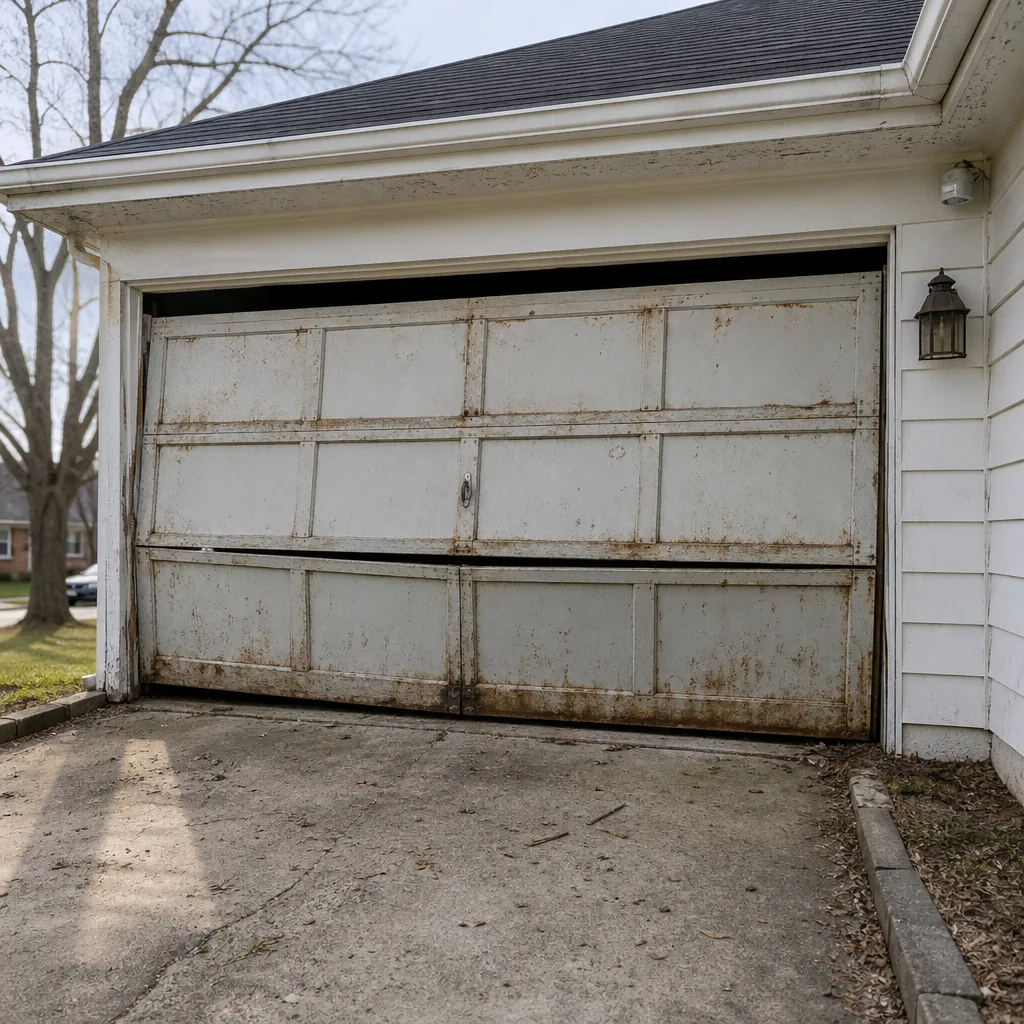
Replacement usually wins when: the panels are dented, rusted through at the bottom rail, or visibly bowed; the door has had three or more repair visits in two years; the hardware is a mixed bag of original and replacement parts; or the door is over 20 years old and the insulation rating is below R-8. At that point, the cost of a repair starts to approach a meaningful fraction of the replacement cost, and the replacement buys you a warranty and a known service life.
The middle zone: panel replacement on a door that’s otherwise fine. A dented or rusted panel can be swapped without replacing the whole door. That’s usually the right move when the panel profile is still available from the manufacturer. If the brand isn’t one we carry parts for, that’s the one scenario where a full replacement can be cheaper than a panel match, and it’s worth asking upfront.
Replacement is not same-day work. It’s measured, ordered, and scheduled: measure, quote, order, install. A quote that promises “next-day replacement” on a custom door is a quote that hasn’t been to measure yet or is pulling from a stock size that may not match your opening. Ask for a free measure and a written price; that’s the honest path.
Brand Familiarity and the Cost of Getting the Wrong Part
Brand familiarity sounds like a soft sales point, but it’s actually a cost line. When a tech knows the door, they spec the right part on the first visit. When they don’t, the quote has to add room for a return trip, and that return trip is either on you or priced into the quote.
Our technicians have up to 10 years of experience, and they work on equipment from eight major brands: LiftMaster, Chamberlain, Genie, Clopay, Amarr, Wayne Dalton, Craftsman, and Raynor. That range covers the doors and openers that are actually common in Arlington homes. The practical effect on a quote is that we can commit to a price before the tech is on site in more cases, because we already know which panel profile, which hinge pattern, and which opener wiring scheme your door uses.
For opener work, the difference matters. A legacy chain-drive unit and a modern smart opener have different diagnostic paths, different parts, and different install steps. A specialist who knows both can quote firm; a generalist who sees mostly one type will hedge the quote, and a hedged quote is the one that grows. Our opener repair page covers the full spectrum, and our main Pryor Garage Door Repair service page lists everything we handle in Arlington.
Common Mistakes to Avoid
- Signing the lowest quote before it’s itemized. The lowest number is the highest number once the missing line items are added back. Get disposal, permit, and opening modification itemized before you sign anything.
- Replacing one spring and not the other. Springs cycle together. One new spring beside a tired one guarantees a second repair visit in the near future. Replace as a pair unless you have a documented reason not to.
- Assuming all steel doors are the same. Gauge, insulation rating, and finish quality vary widely at the same size. Two quotes for a “16×7 steel door” can describe very different doors. Ask for make and model in writing.
- Skipping the permit question. If your replacement involves modifying the opening or changing its size, ask your city’s building department what’s required before work starts. A quote that doesn’t address this isn’t a complete quote.
- Reusing old springs and hardware on a heavier insulated door. An R-16 door weighs more than the bare steel it replaces. Reusing spec’d-for-less hardware shortens service life and puts stress on the operator. Ask what spring and hardware specs are quoted for the actual door weight.
- Chasing a “same-day” replacement. Replacements are measured, ordered, and installed. If a company promises same-day replacement on a custom door, that’s a warning sign, not a bargain. Free measure and a written quote is the honest path.
- Over-insulating a detached, unconditioned garage. R-16 makes sense when the garage shares conditioned space. On a detached garage with no living space above, the payback is minimal; put the money into a better door seal and hardware instead.
See the difference
 Before
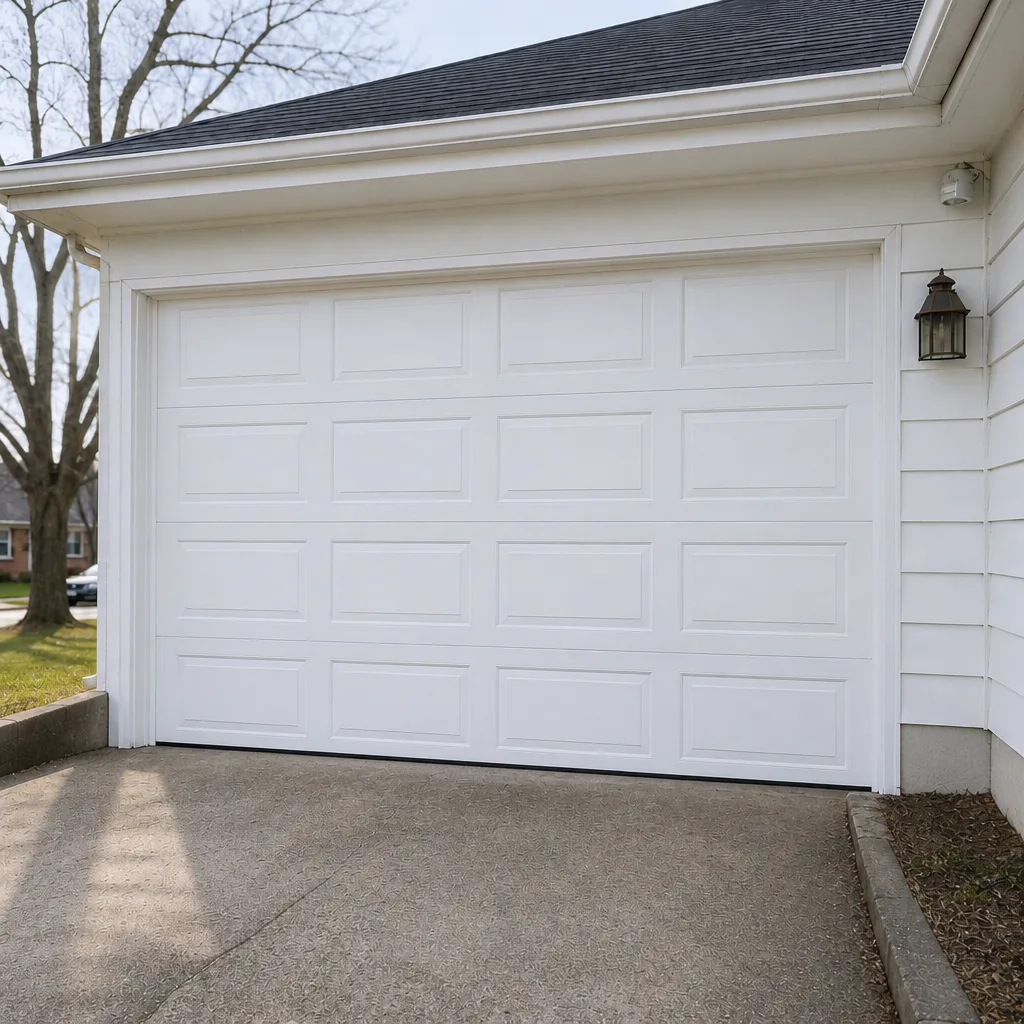 After
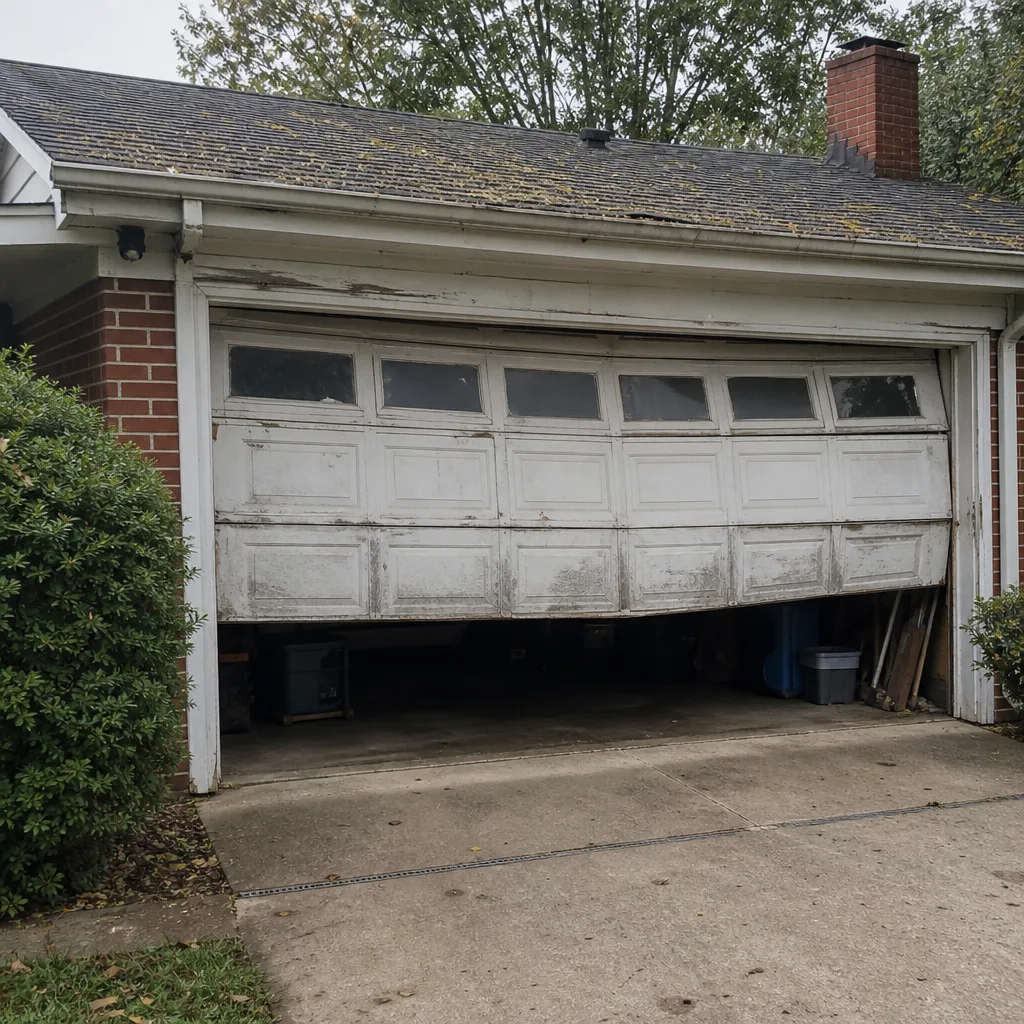 Before
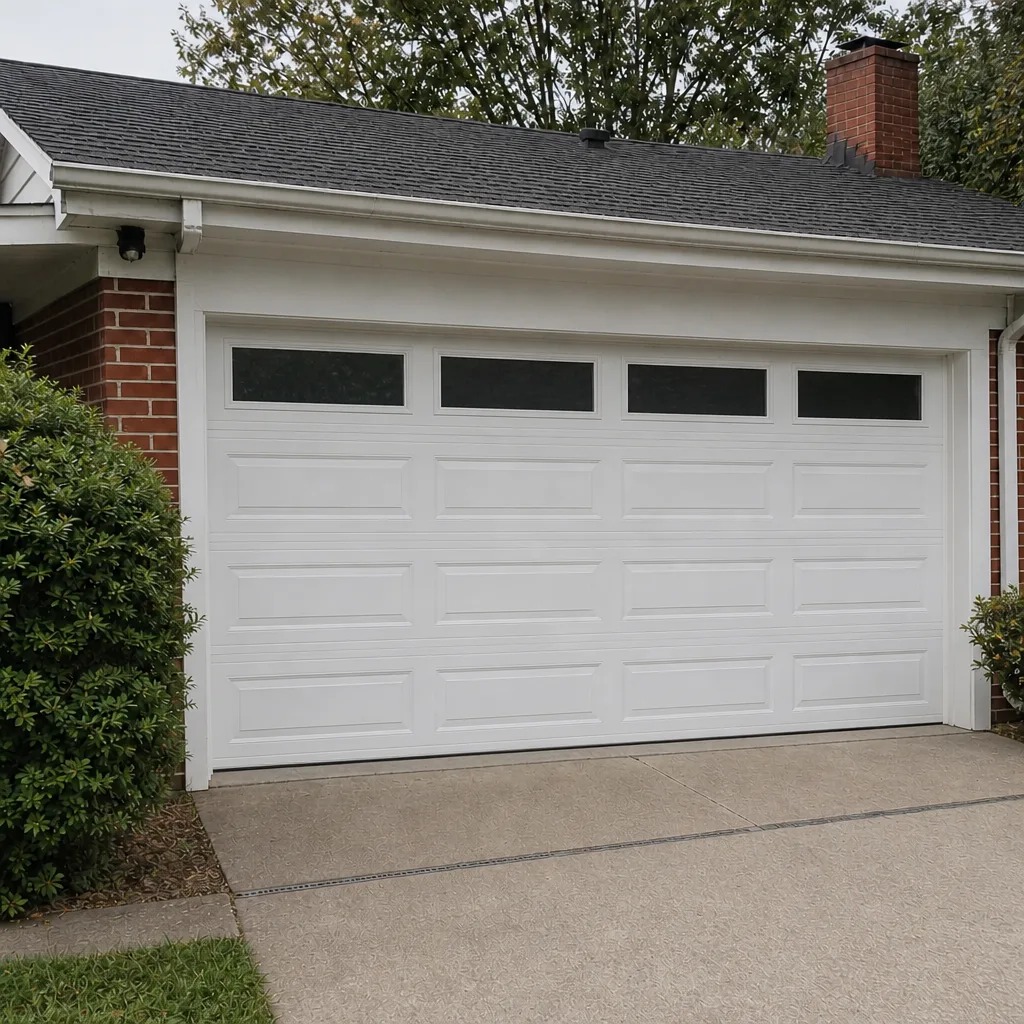 After
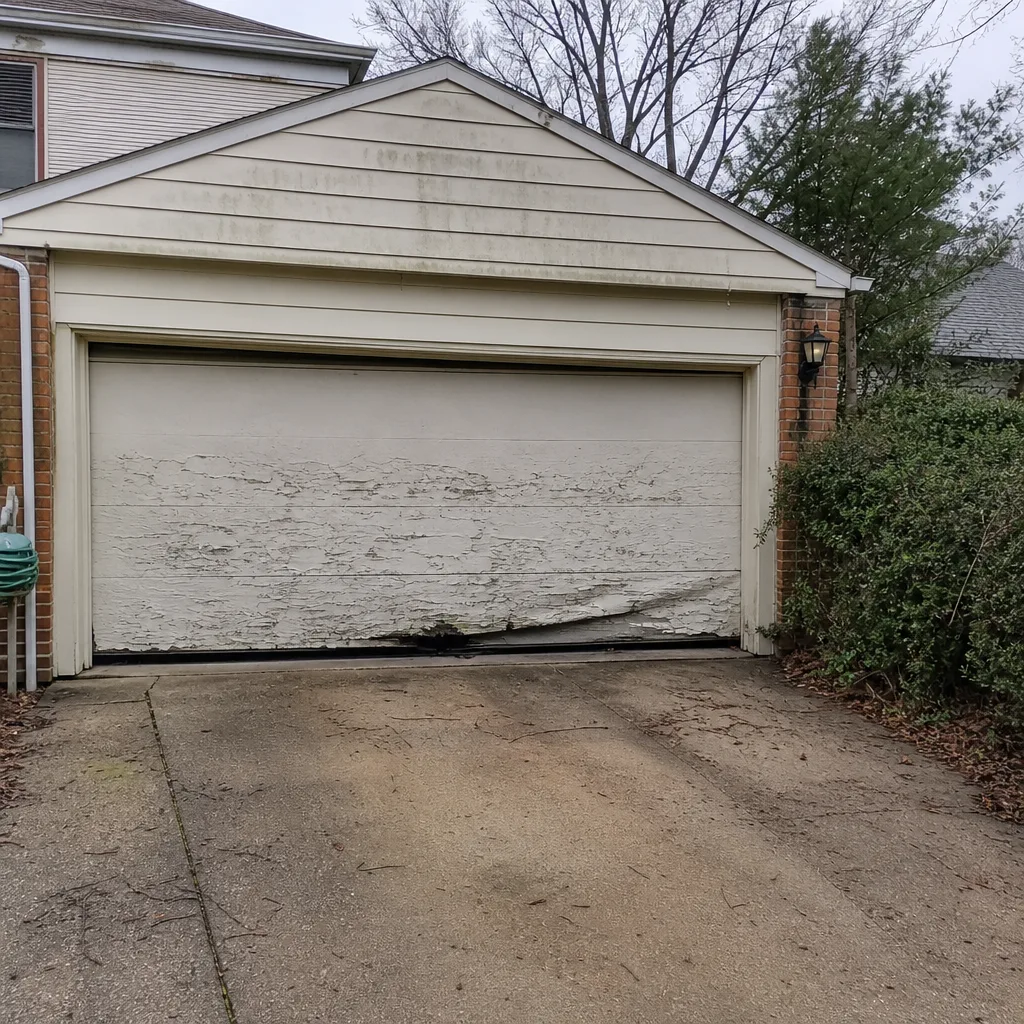 Before
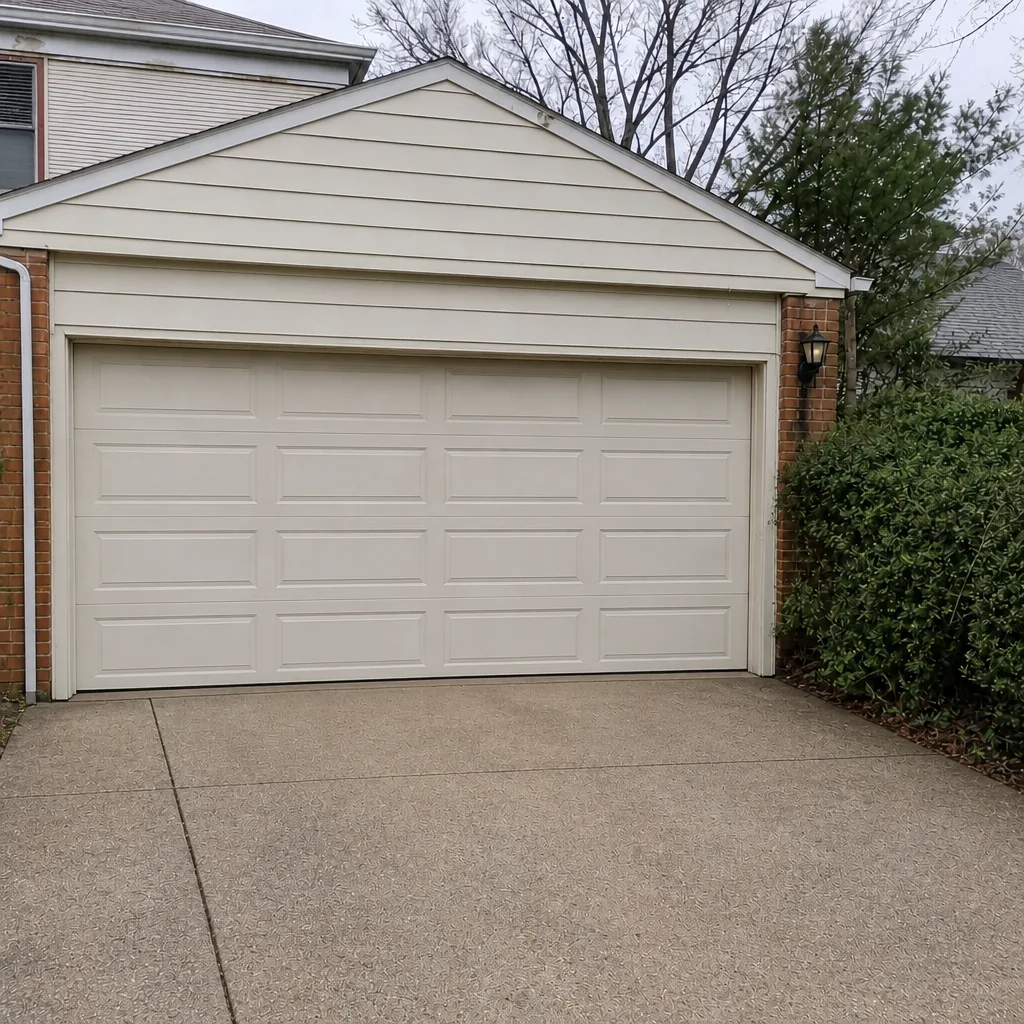 After
When to Call a Professional
Some failures are a mild inconvenience. Others are genuinely dangerous or a security problem. Call a professional immediately if the door won’t close and won’t stay closed (your home is open to the weather and the street), if the door has come off one or both tracks (a door that’s off track can fall), if a spring has snapped (a snapped torsion spring stores enormous energy and is not a DIY repair; we don’t give step-by-step instructions because the injury risk is real), if a cable has come loose or frayed (both the cable and the spring hold the door’s weight), if the opener runs but the door doesn’t move (a stripped gear or snapped trolley can be a hidden injury risk), or if the door is visibly bowed or the panels are separating from their hinges. Electrical panel work, gas-adjacent work, and roof or steep-height work are outside our scope; a garage door is what we do. Pryor Garage Door Repair offers free estimates in Arlington. Call (844) 917-3733. We answer 24/7. Fast dispatch from 7am to 7pm, Sunday through Friday, closed Saturday. When a door fails on a Saturday, call and we’ll book you for Sunday.
Frequently Asked Questions
A full garage door replacement in Arlington in 2026 typically runs $1,800 to $3,400 for a single-car standard steel door, $2,400 to $4,500 for a two-car standard steel door, and $3,200 to $5,800 for a two-car insulated steel door, with wood composite or custom doors at $4,500 to $6,500+. The ranges are estimates; your written quote, agreed before any work starts, sets the final price. Call (844) 917-3733 for a free measure and a written estimate.
Arlington labor costs run above the national average because the local labor market is more expensive, and older Arlington homes frequently need opening modifications that newer homes don’t. A quote built on national averages assumes a standard opening with ideal headroom, which is not what most Arlington homes have. The written quote you receive reflects the actual scope of your opening. Call (844) 917-3733 for an Arlington-specific estimate.
Repair is usually cheaper when the door is structurally sound, only one or two components have failed, and the door is under 15 years old; replacement is usually the better long-run value when the panels are dented, rusted, or bowed, the door has had several repair visits in a short window, or it’s over 20 years old with weak insulation. The break-even point is when a single repair approaches a meaningful fraction of the replacement cost, and the replacement buys you a warranty and a known service life. Call (844) 917-3733 for a repair-versus-replace estimate on your specific door.
Most jurisdictions require a permit when the replacement involves a structural change, a size change, or modification of the opening, and a straight like-for-like replacement sometimes doesn’t. The specific rules vary by municipality, so ask your city’s building department what applies to your project before work starts. An honest quote will list the permit line if one is needed; a quote that silently omits it is a quote that hasn’t thought about it. Call (844) 917-3733 and we’ll work with you on what your project requires.
No. We quote before the work starts and the written estimate is the price you pay. The only exceptions are hidden conditions that a visual inspection couldn’t reasonably catch, such as a failed framing member behind a panel or a non-standard opening size that only shows up on measure. In those cases we stop, explain, and give you a revised written quote before any additional work proceeds. Call (844) 917-3733 for a free estimate.
A full door replacement in Arlington is usually a scheduled install, not a same-day service, because the door has to be measured, ordered to spec, and then installed once it arrives. Lead time depends on whether the door is standard stock or custom. A like-for-like repair like a spring or cable replacement can often be handled on the same day, but a new door is planned, not rushed. Call (844) 917-3733 for a free measure and a written quote with a realistic timeline.
The Bottom Line
Garage door pricing in Arlington in 2026 runs higher than national averages, and the gap is explained by labor market cost and the reality of older, varied housing stock. That’s not a reason to accept a vague quote; it’s a reason to read one carefully. The five-line summary: get three itemized quotes on the same scope, insist that disposal, permit, and opening modification appear in writing, compare doors by make, model, and R-value rather than by “steel door” label, replace springs in pairs, and only upgrade to R-16 when the garage shares conditioned space or has a room above it. Do that, and the number on the quote is the number you’ll pay. If you’d rather have one honest quote to compare against, call (844) 917-3733. Free estimates, and we answer 24/7.
Written by the team at Pryor Garage Door Repair.